Free Story Splitter
Break down large user stories into smaller, independently deliverable stories
Ready to Split a User Story?
Paste a large user story and our AI will break it into smaller, independently deliverable stories with acceptance criteria.
Break down large user stories for better sprint planning
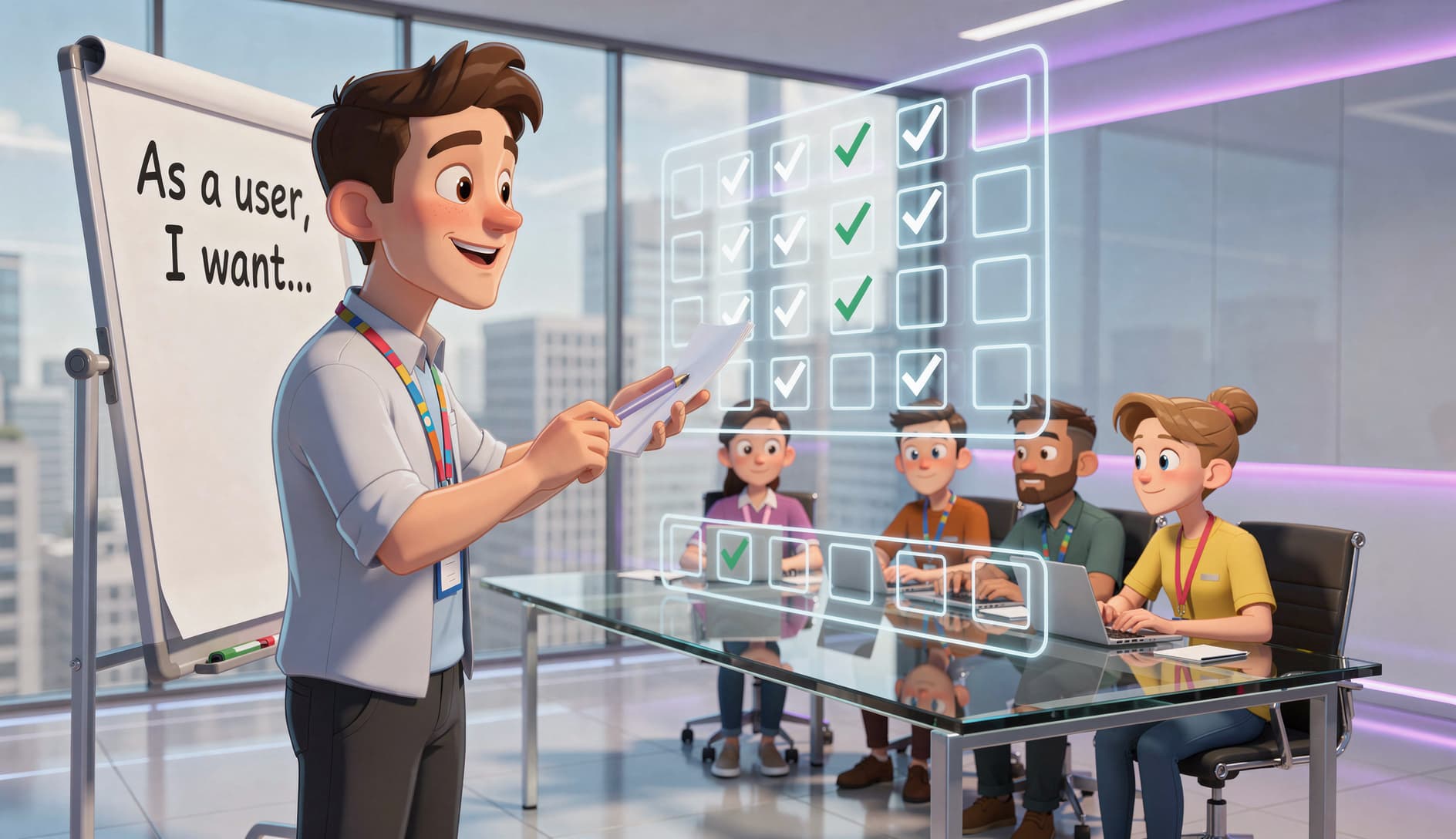
Large user stories cause problems in sprint planning. They're hard to estimate, take too long to deliver, and hide complexity that only surfaces mid-sprint. When a story can't fit in a single sprint, the team either rushes through it or carries it over, both of which hurt predictability and morale.
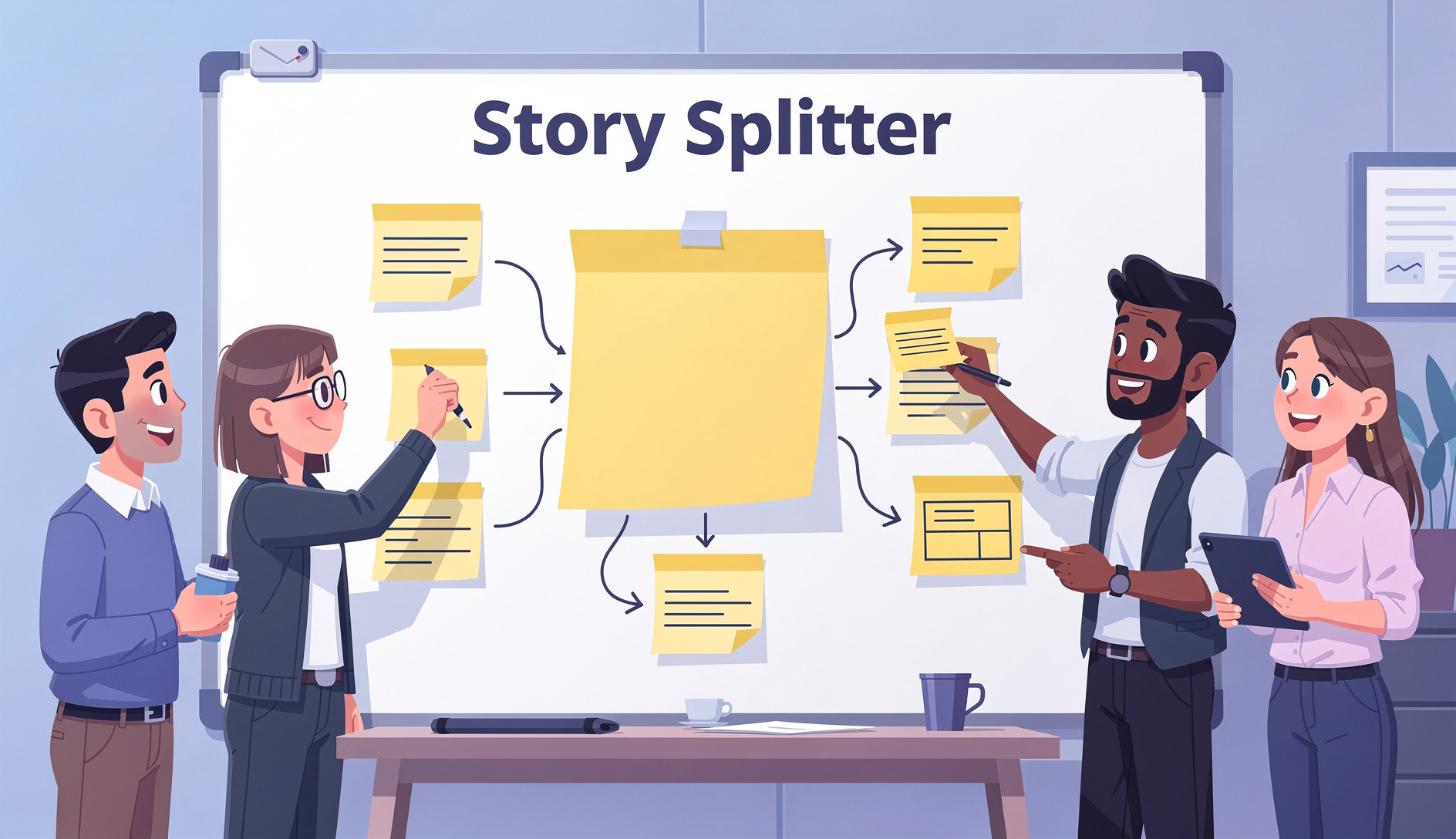
This tool takes an oversized user story and breaks it into smaller pieces that your team can estimate, build, and ship independently. You pick a splitting strategy based on what makes sense for your situation, and the AI produces sub-stories with acceptance criteria ready for your backlog.
Why smaller stories lead to better outcomes
More accurate estimates
Smaller stories have less hidden complexity. When the scope is clear, planning poker sessions produce estimates the team actually trusts.
Faster feedback loops
Each small story can be reviewed and tested independently. You catch problems earlier and course-correct before investing more effort.
Visible progress
Completing multiple small stories each sprint shows real movement. The team sees results, and stakeholders see the board moving.
Reduced carry-over
Stories sized to fit within a sprint get finished within that sprint. Less carry-over means cleaner retrospectives and better velocity tracking.
How to split stories well
Story splitting is a skill that improves with practice. Here are approaches that work:
1. Each piece should deliver value
A good split produces stories that are useful on their own, not just technical tasks. If a sub-story doesn't make sense to a user, look for a different way to slice it.
2. Try multiple strategies
If splitting by workflow feels wrong, try splitting by data or by complexity. Some stories split naturally along one axis but not another.
3. Don't split too small
The goal is stories that fit in a sprint, not stories that take an hour. Overly small stories create overhead in tracking and review that outweighs the benefits.