
Posts
Developer burnout in agile: warning signs hiding in your ceremonies


Matt Lewandowski
Last updated 16/02/202613 min read
The 2026 burnout reality
Warning signs hiding in your standups

Generic updates
No blockers, ever
One-line autopilot
Warning signs hiding in your retrospectives
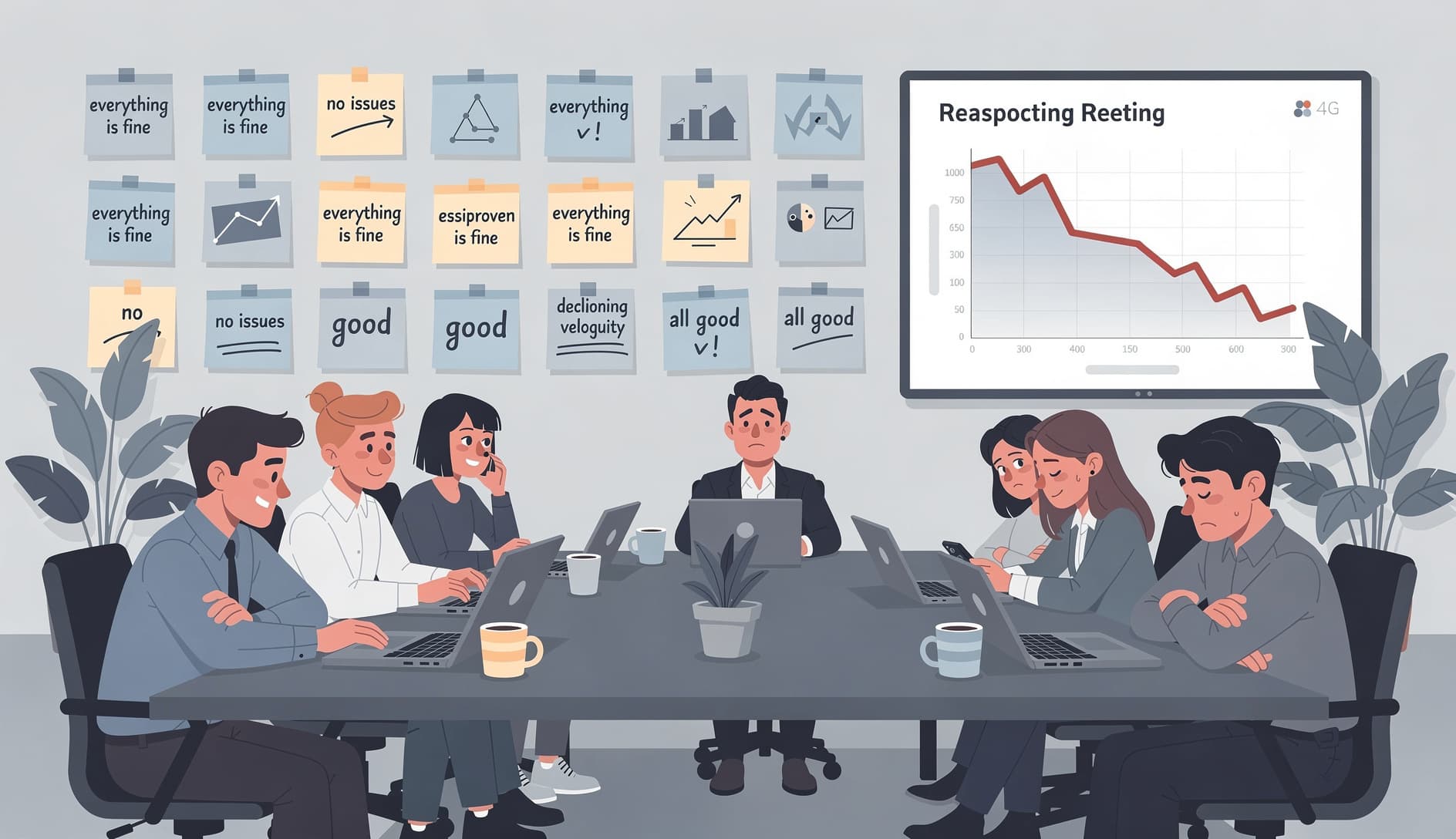
Declining participation
"Everything is fine" syndrome
The same issues recycling
Warning signs hiding in your estimation

Pessimistic estimates creeping up
Less discussion after reveal
Apathy about accuracy
Root causes beyond "too much work"
🎯Unclear priorities
⏱️No sustainable pace
📅Ceremony overload
🔒Lack of autonomy
What scrum masters and engineering managers can do
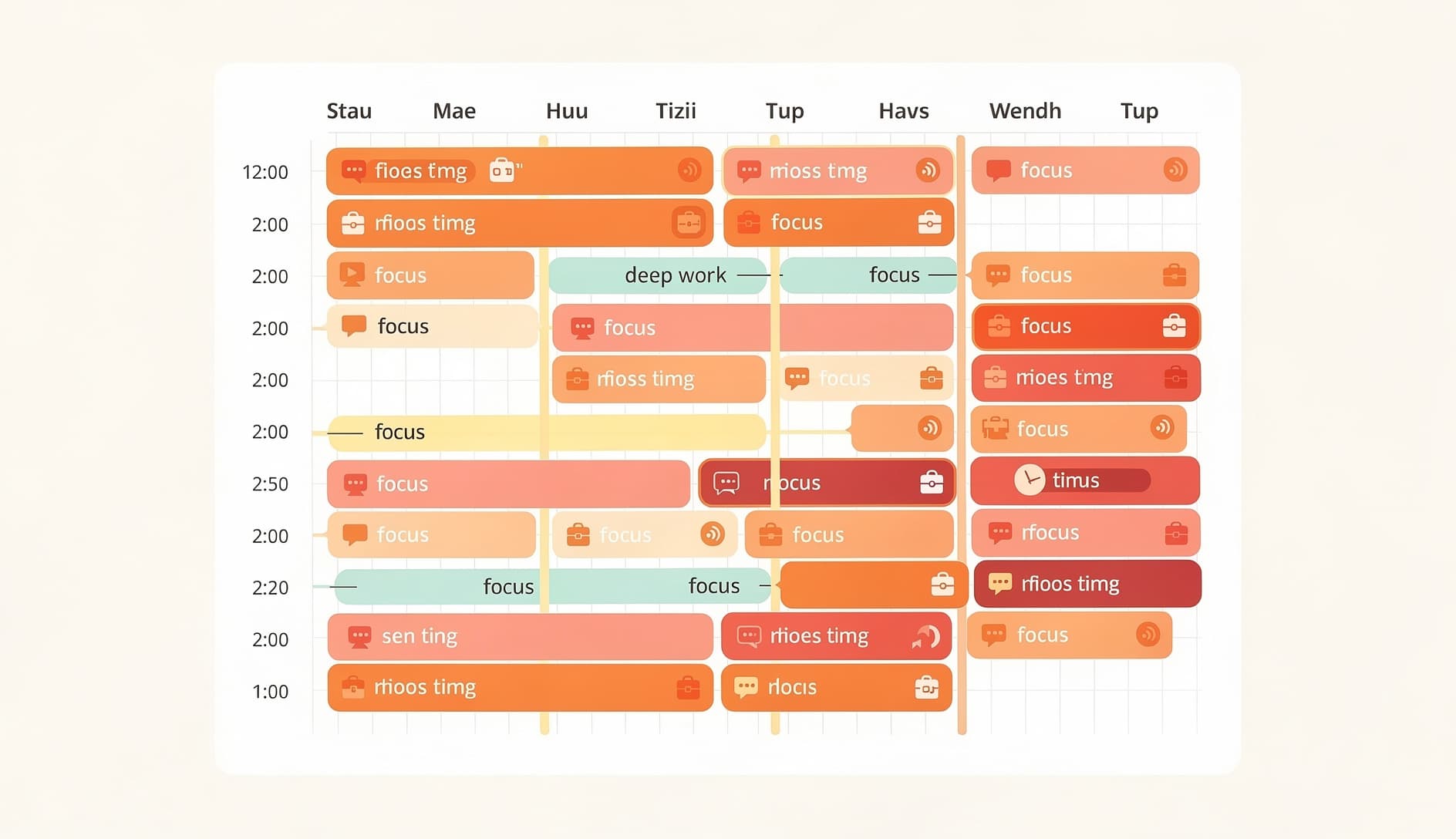
Protect focus time ruthlessly
Audit your ceremony load
Count the total hours per week each developer spends in agile ceremonies. Include refinement, planning, standup, review, retro, and any recurring syncs. If it exceeds 20% of their week, you have a structural problem. Move standups async
Replace daily synchronous standups with async written updates. Keep one weekly sync for face-to-face connection. This recovers 60-75 minutes of team time per week while producing better-documented status information. Block focus time on the calendar
Add shared "no meetings" blocks to the team calendar. Mornings work best for most people, but let the team decide. The key is that the block is defended by the scrum master, not left to individual negotiation. Consolidate ceremony days
Cluster remaining synchronous ceremonies on one or two days per week. Tuesday and Thursday for ceremonies, Monday, Wednesday, and Friday for deep work. Three full days of focus beats five fragmented ones.
Track participation trends, not just velocity
- How many unique contributors post in each retro?
- How many standup updates contain specific detail versus generic phrases?
- How much discussion happens after estimation reveals?
- Who has gone quiet in the last two sprints who wasn't quiet before?
Use retros as a burnout detection tool
Sustainable pace: the forgotten agile principle
- Plan to 70-80% capacity. Leave room for unplanned work, learning, and recovery. A team planned at 100% capacity has zero margin for surprises, and there are always surprises.
- Track overtime as a red metric. If people are regularly working beyond their contracted hours to meet sprint commitments, your planning process is broken, not your team's work ethic.
- Build in recovery sprints. After a high-intensity release, schedule a lighter sprint focused on tech debt, tooling improvements, or learning. Recovery isn't laziness. It's maintenance.
- Respect time off. When someone takes PTO, reduce sprint capacity proportionally. Don't expect the remaining team to absorb the gap.