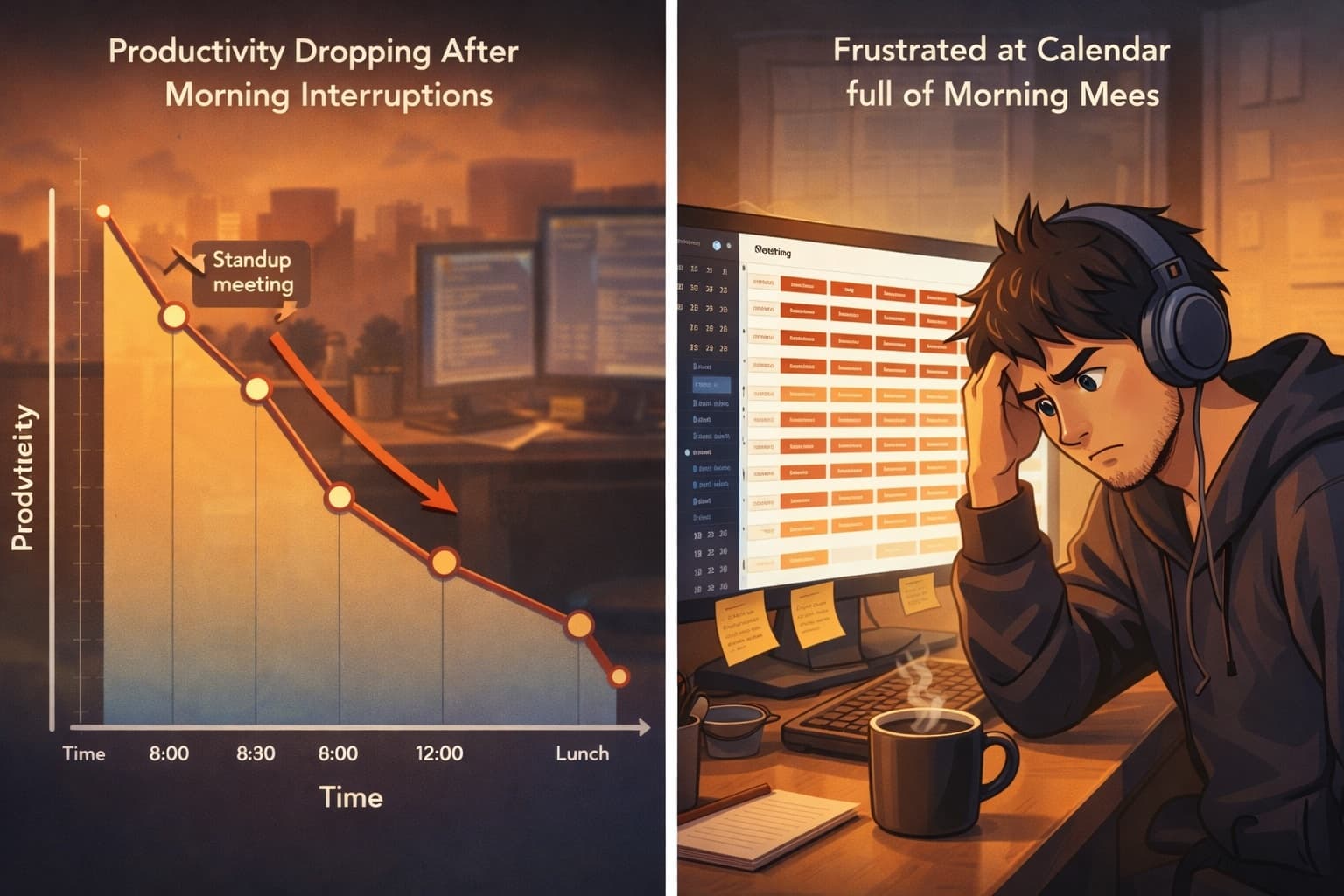
The Meeting-Free Morning: Why Protecting Focus Time Starts With Killing the 9am Standup
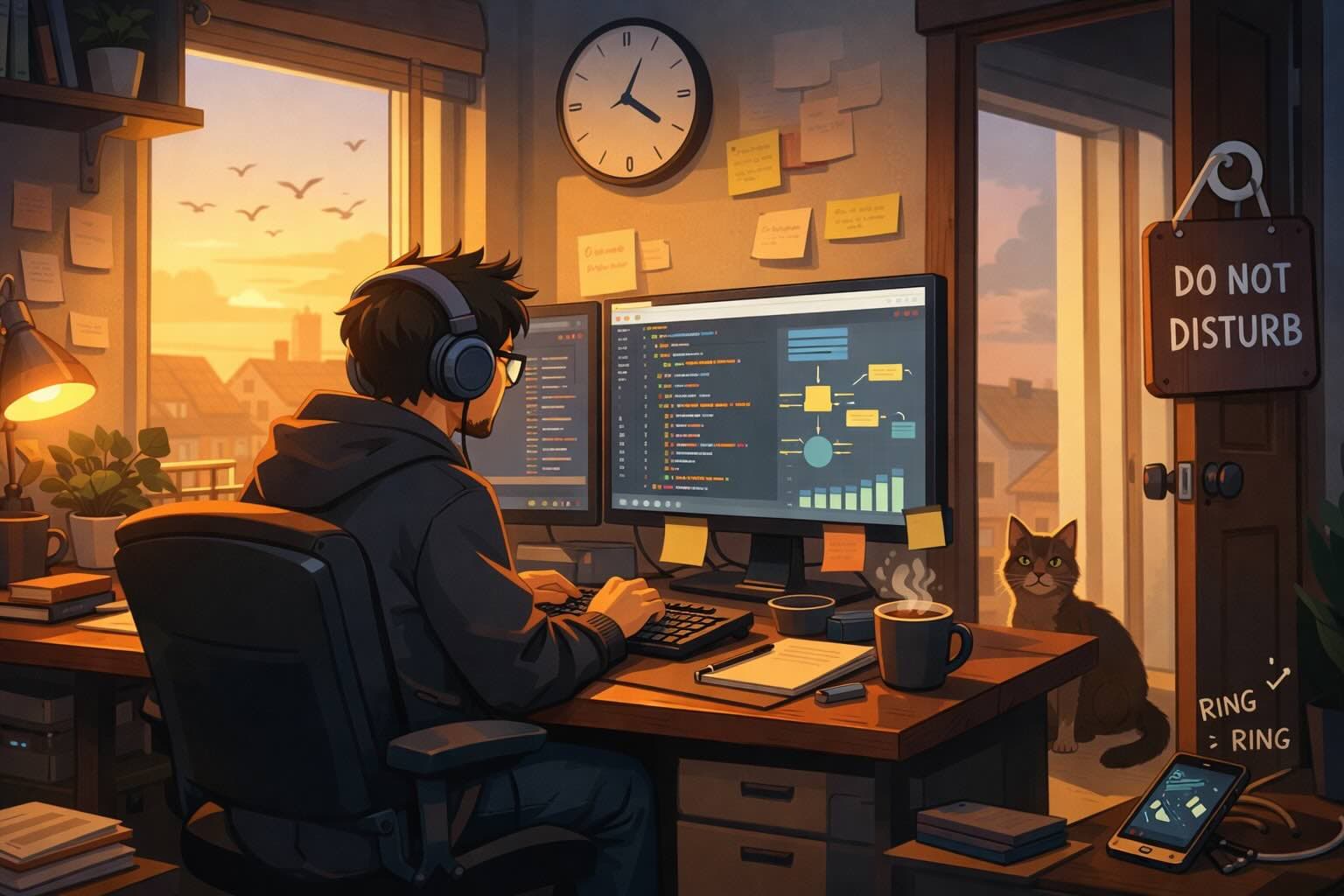
Developer focused on deep work without morning interruptionsDeveloper focused on deep work without morning interruptions Your 9am standup is a productivity tax. Every morning, right when your brain is sharpest and most ready for complex problem-solving, you gather your team to announce what you did yesterday. You break the first flow state of the day before it even begins. Then everyone spends 23 minutes trying to remember what they were about to work on. This ritual made sense in 2001, when the Agile Manifesto was written and distributed teams were rare. In 2026, it's an anachronism that belongs in a museum next to cubicle farms and 8-hour workdays.

The morning productivity window is real
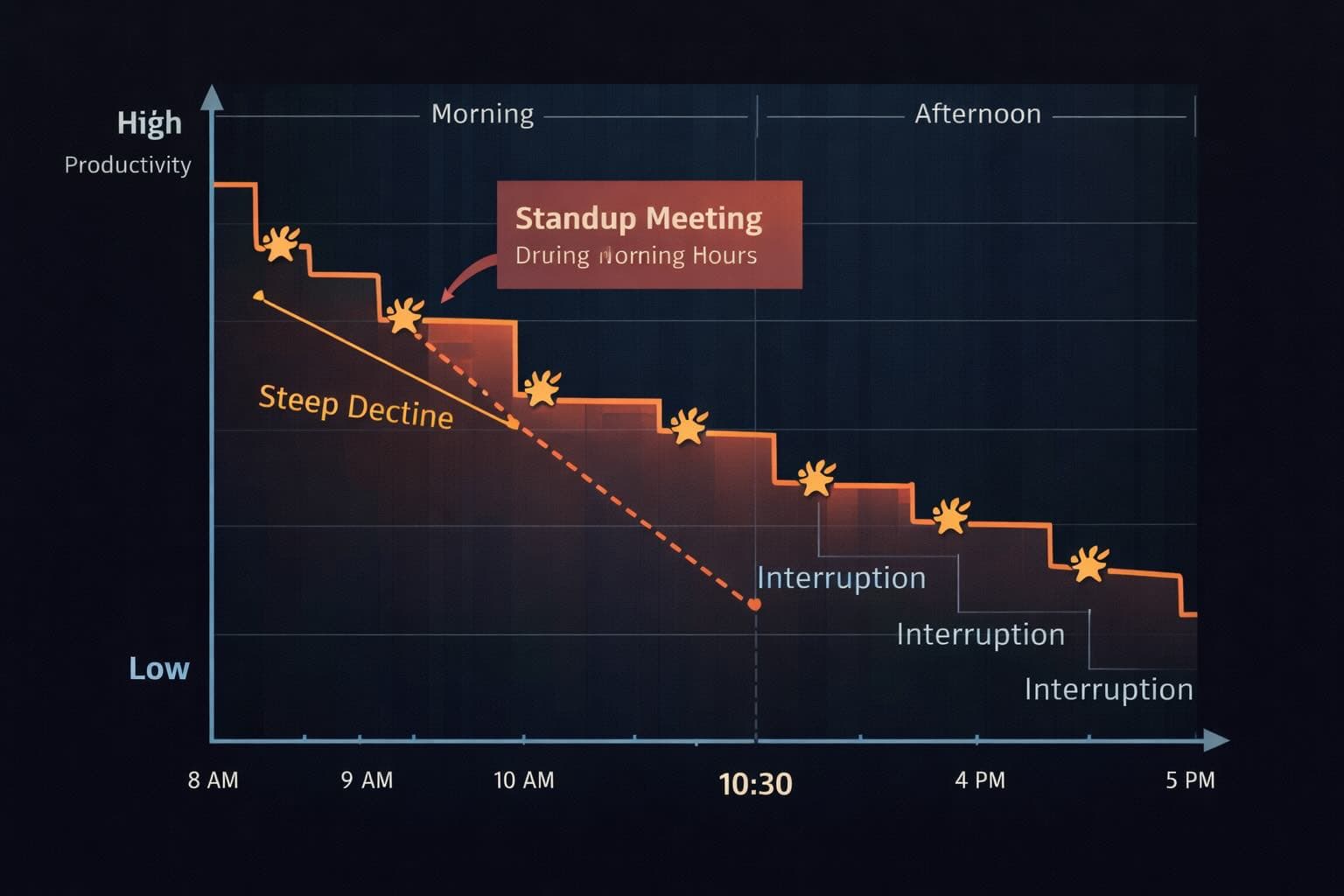
People generally have the most energy and concentration for complex work in the morning. This isn't opinion, it's biology. Cortisol peaks shortly after waking, priming the brain for focus and cognitive effort. By afternoon, that edge dulls. Yet most teams schedule their standup at 9am, right at the start of the workday. The meeting itself might only last 15 minutes. But a developer with just 90 minutes of scattered meetings throughout the day can lose 4+ hours of potential deep work due to context switching. One developer described spending two hours mentally architecting a new feature before work, only to have that mental model completely disrupted by a "quick sync" at 9am. It took three hours to rebuild the same level of understanding. Graph showing productivity dropping after each interruption, with a steep decline during morning hours when a standup meeting occursGraph showing productivity dropping after each interruption, with a steep decline during morning hours when a standup meeting occurs

The 15-minute meeting that costs 4 hours

A single hour-long meeting in the middle of the morning and another in the middle of the afternoon can effectively destroy an entire day of potential deep work. But even a short standup creates damage far beyond its calendar footprint. Here's the math: Context switching can reduce productivity by 20% to 80%, depending on the type and frequency of switches. The average employee is interrupted 31.6 times per day, getting pulled out of their task work every 15 minutes. Each interruption resets the 15-20 minutes required to reach a productive flow state. Your morning standup isn't just 15 minutes. It's the anchor that makes every other interruption worse by fragmenting the day from the start.
😰Pre-Meeting Anxiety

Developers avoid starting complex tasks before standup because they know they'll be interrupted. The meeting casts a shadow over the first hour of work.

🔄Post-Meeting Recovery

After the meeting ends, developers need time to context-switch back to their code. Often they check email, Slack, or social media first, extending the interruption.

📅Meeting Creep

Once 9am is blocked, other meetings cluster around it. "Let's just do it after standup" leads to the entire morning becoming meeting time.

🌍Timezone Exclusion

The 9am standup often excludes team members in other timezones, forcing awkward compromises that don't work well for anyone.

Developer looking frustrated at calendar full of morning meetings, coffee getting cold on deskDeveloper looking frustrated at calendar full of morning meetings, coffee getting cold on desk

Why teams cling to the morning standup

Despite the costs, teams resist changing their standup time or format. The reasons usually boil down to management anxiety rather than team productivity: "It sets the tone for the day." Does it? Or does it set the tone for the manager who wants to feel informed? The developers were already planning to work on exactly what they mentioned. "It surfaces blockers early." Blockers can be surfaced asynchronously. If someone is truly blocked, waiting until 9am to mention it is already too late. "It builds team connection." There are better ways to build connection than forcing everyone to recite status updates. Team building happens through shared context and collaborative problem-solving, not morning rituals. "We've always done it this way." This is never a valid argument for anything.

The case for async standups

Async standups replace the morning meeting with written updates that team members submit on their own schedule. Instead of gathering everyone at the same time, team members share what they accomplished, what they're working on, and any blockers whenever it fits their workflow.

Protected focus time

Without a meeting breaking up the morning, developers can start their day with 2-4 hours of uninterrupted deep work. They complete standup updates during natural breaks rather than interrupting flow.

Better information quality

Written updates are searchable, persistent, and more thoughtful than off-the-cuff verbal reports. Team members can include links, screenshots, and context that would take too long to explain verbally.

Timezone independence

Async standups work for distributed teams across any timezone combination. No one has to wake up early or stay late just to attend a 15-minute status update.

Time savings at scale

A 15-minute daily standup with 8 people is 2 hours of combined team time per day, 10 hours per week, 520 hours per year. That's 13 full work weeks of productive time returned to actual work. Developer working peacefully in morning light with headphones on, no notifications, deep in flow stateDeveloper working peacefully in morning light with headphones on, no notifications, deep in flow state

How companies are killing the morning standup

Some have already made the shift: Buffer implemented "No Meeting Wednesdays" and reported increases in productivity and code quality. Their developers use that day for deep work on complex problems. GitLab runs a fully async organization where standups are written updates in their project management tool. They've documented their approach in their public handbook. Many remote-first startups have never had synchronous standups at all. They built their processes async from day one and see no reason to add synchronous meetings. Teams that protect focus time ship more than teams that fragment it with meetings. It's not complicated.

Making the transition

Killing your 9am standup doesn't mean abandoning coordination. It means doing it better.
Start with async updates
Move your standup questions to a written format. Team members submit their updates whenever works for their schedule, typically first thing in the morning or end of previous day.
Protect the morning
Declare the hours before 11am or noon as meeting-free for your team. Move any essential synchronous meetings to the afternoon.
Use AI summaries
Modern async standup tools like Kollabe generate AI summaries of team updates. Managers get the insights they need without reading every update or holding a meeting.
Reserve sync for blockers
Keep synchronous communication for actual emergencies and complex problem-solving. If someone is truly blocked, they should ping the team immediately, not wait for standup.
Measure the results
Track output metrics before and after the change. Most teams see improvements in shipping velocity, code quality, and developer satisfaction.
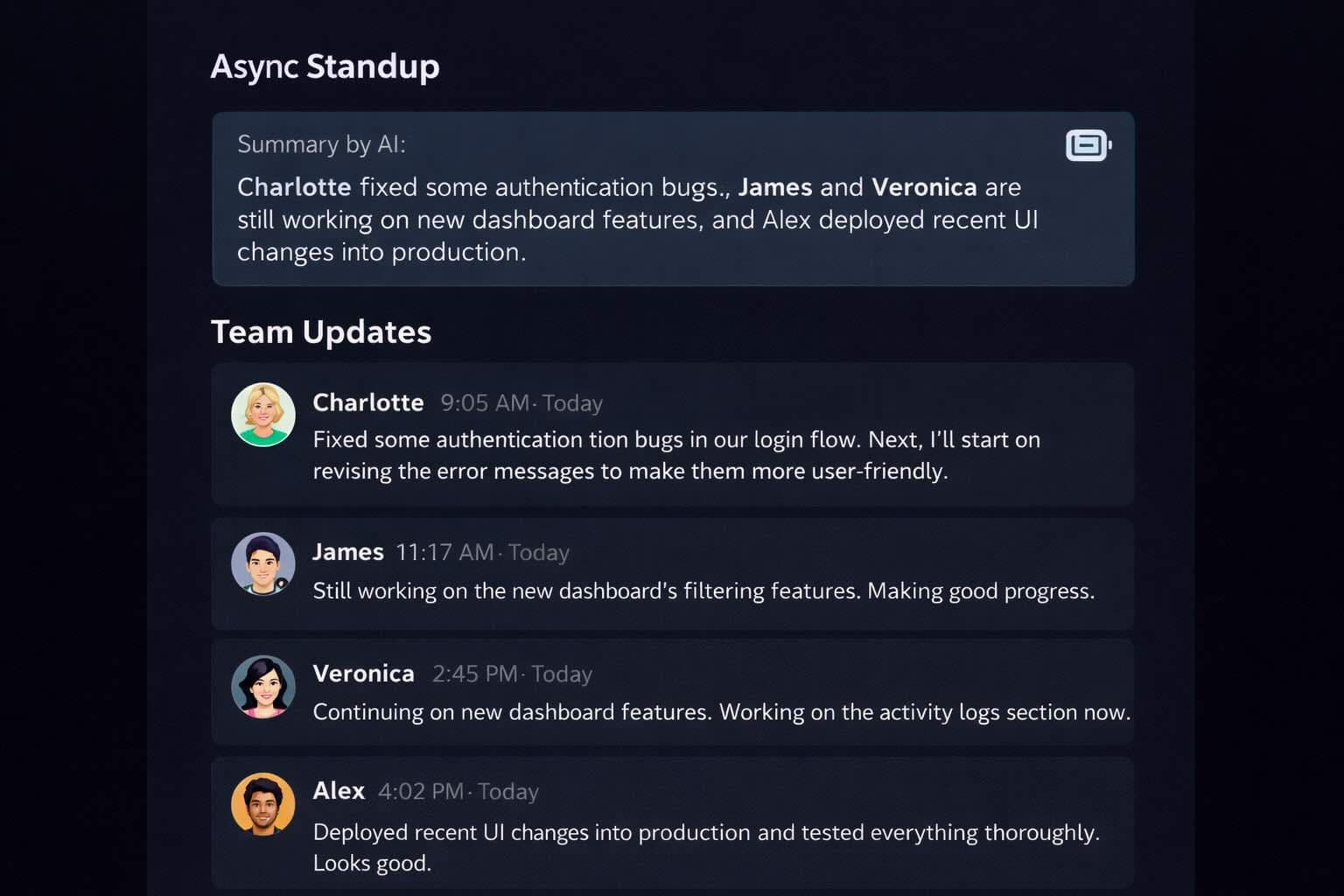
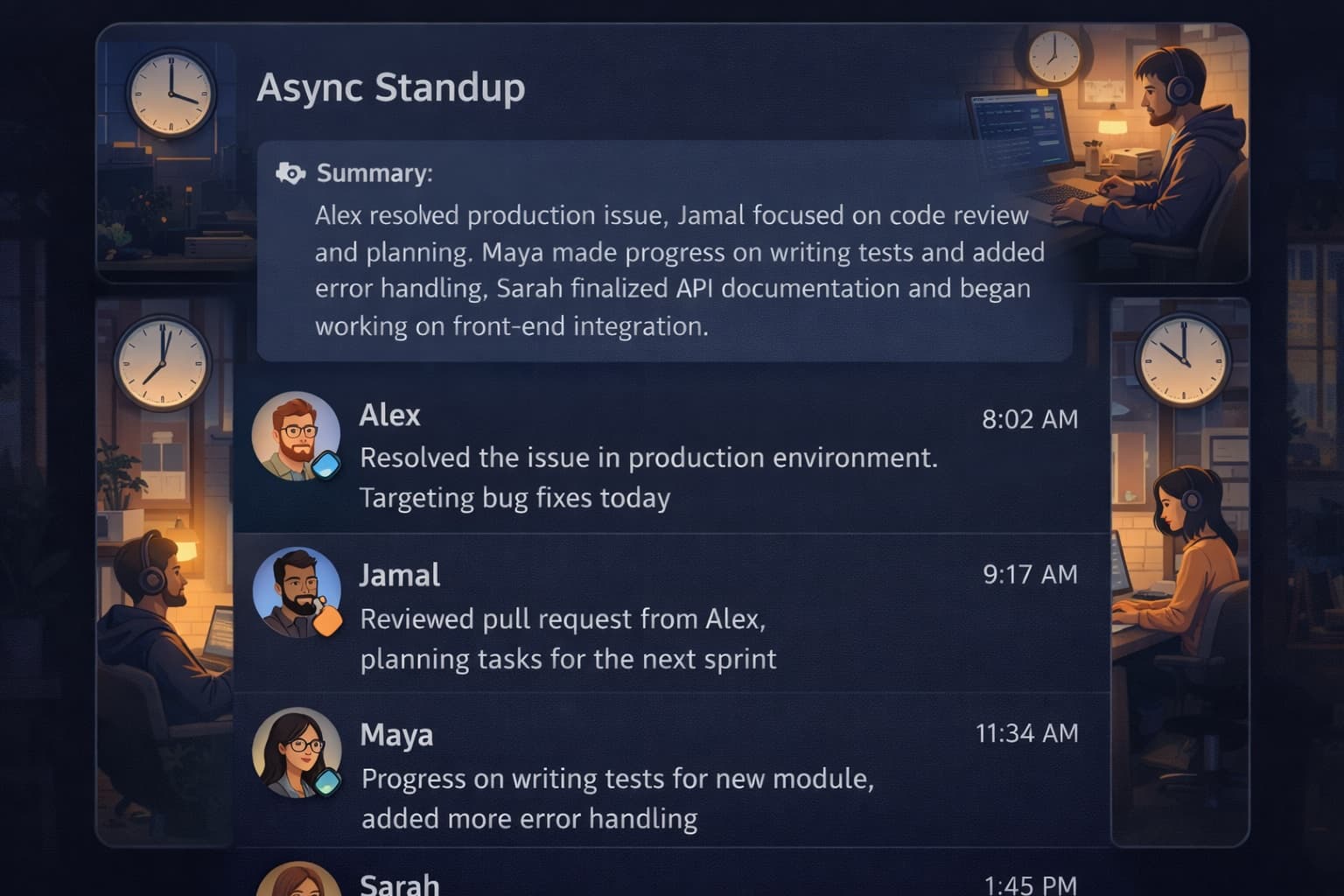
Async standup interface showing team updates submitted at different times throughout the day with AI-generated summary at the topAsync standup interface showing team updates submitted at different times throughout the day with AI-generated summary at the top

What to use instead

A good async standup tool should have these characteristics:

Flexible submission windows that respect different timezones and work schedules

AI-powered summaries so managers don't need to read every update

Rich media support for screenshots, videos, and links

Persistent history so updates are searchable and referenceable

Smart reminders that nudge team members without being intrusive

Integration with existing tools like Slack, Teams, or project management software

Kollabe's async standup feature handles all of this. Team members submit updates at their convenience, AI generates daily summaries that surface blockers and accomplishments, and the entire history is searchable. No meeting required. Team members in different locations and time zones all contributing to the same async standup, clock showing different timesTeam members in different locations and time zones all contributing to the same async standup, clock showing different times

The objections you'll hear

When you propose killing the 9am standup, you'll face pushback. Here's how to address it:

You'll gain visibility. Written updates are more detailed and searchable than verbal ones. Plus, with AI summaries, you can review team status in two minutes instead of fifteen.

Schedule dedicated social time instead. Virtual coffee chats, team lunches, or collaborative problem-solving sessions build more connection than reciting yesterday's tasks.

The same way you would if someone got blocked at 2pm: they message the team. Waiting for a 9am standup to mention a blocker was never the right approach anyway.

Modern tools send reminders. And if someone consistently doesn't participate, that's a management conversation, not a reason to keep holding meetings.

Written updates create more accountability, not less. There's a permanent record of what each person committed to work on.

The future is async

Meeting culture isn't just annoying. It's a competitive disadvantage. Teams that protect focus time ship more code. Developers increasingly evaluate job opportunities based on meeting load, and they're right to. The 9am standup was designed for a different era. Colocated teams needed a daily sync point to stay aligned. Distributed teams in 2026 have better tools and different needs. Your team's best work happens in the morning. Stop interrupting it.
Try Kollabe's async standup feature and give your team back their mornings.Last Updated on 02/02/2026