Posts
Why Daily Standups Are Dying (And What's Replacing Them)


Matt Lewandowski
Last updated 14/02/20268 min read
The numbers tell the story
Why traditional standups break down
They interrupt deep work
They become attendance checks
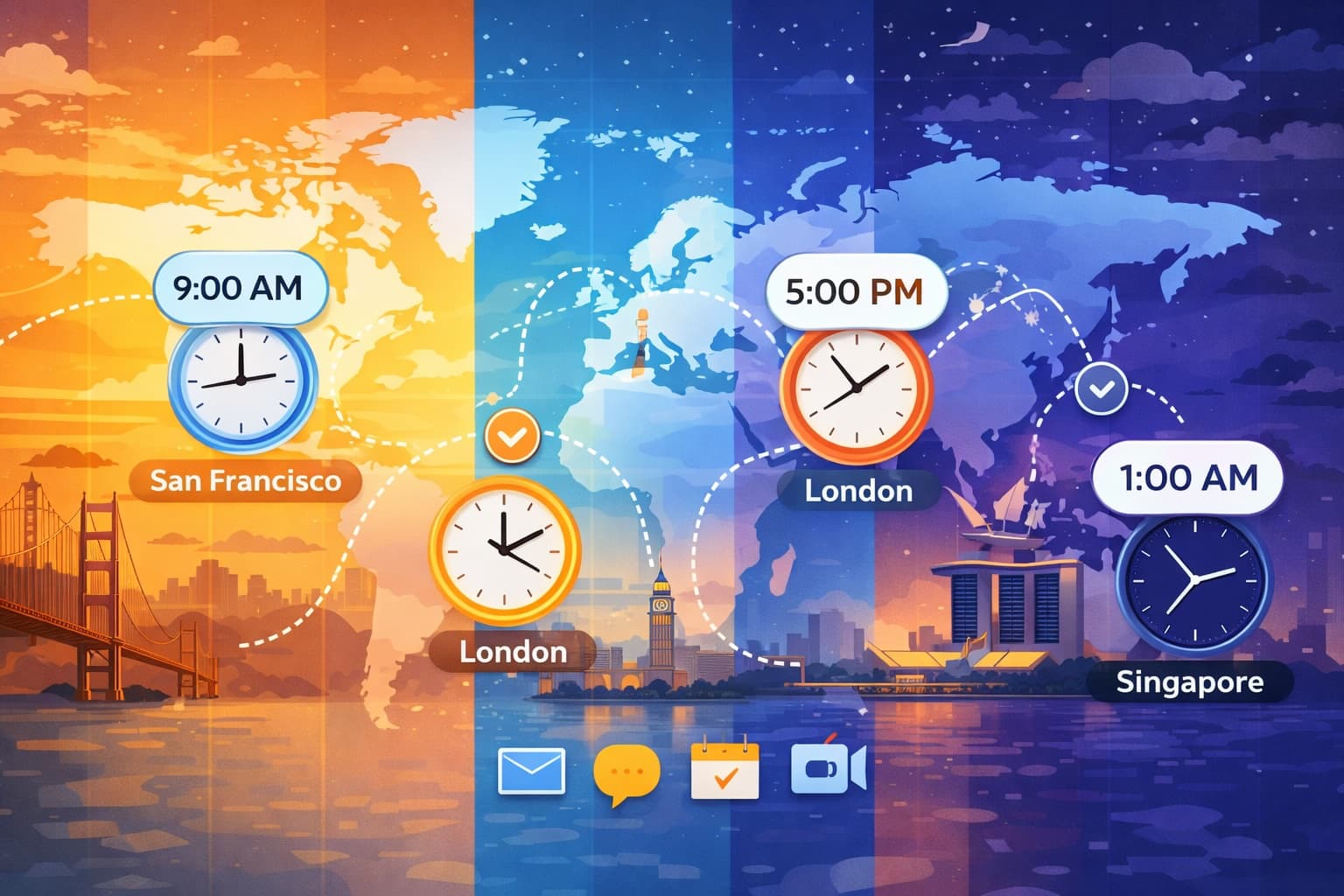
They don't scale

What's actually working instead
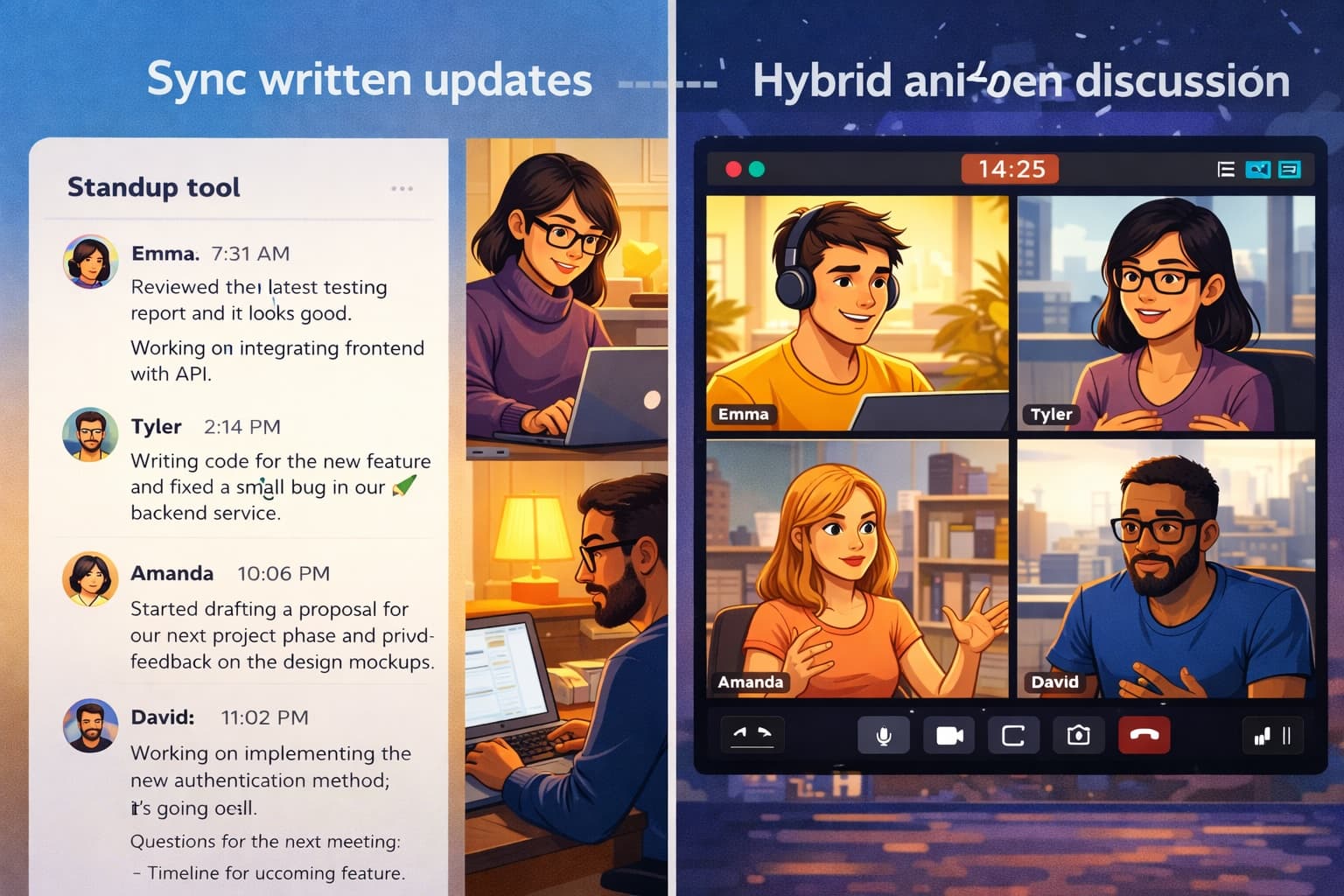
📝Async written updates
🚪Persistent daily rooms
🤖AI-generated summaries
💬Threaded comments
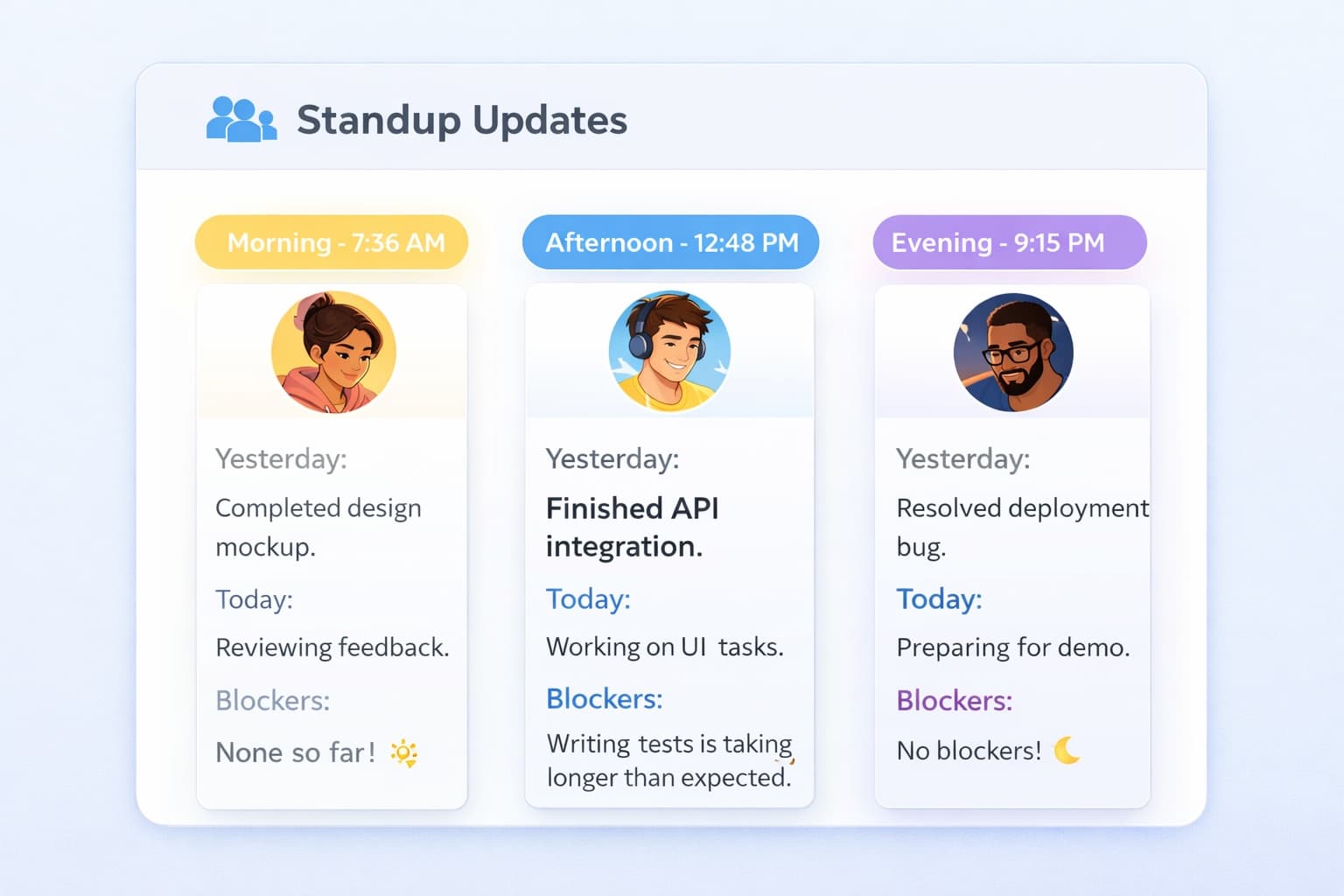
How async standups actually work
Submit your update
Answer your team's standup questions (what you did, what you're doing, any blockers) through a shared tool. Include screenshots or videos when helpful. Review team updates
Check what your teammates shared. This takes 5 minutes instead of 15+ because you can skim text faster than listening to spoken updates. Engage where needed
Comment on blockers you can help with. React to wins. Ask clarifying questions. All async, all in context. Get the summary
AI-generated summaries surface patterns and blockers automatically, so leadership stays informed without reading every update.
Making the transition
Check teammate updates at least once daily
Trust output over presence
What to look for in an async standup tool
| Capability | Why it matters |
|---|---|
| Persistent daily rooms | No overhead of creating meetings. Each day just works. |
| Rich media support | Screenshots, videos, and formatted text make async communication as clear as talking in person. |
| AI summaries | Surfaces patterns and blockers automatically. Managers get the highlights without reading every update. |
| Comments and reactions | Enables conversation without pulling people into sync calls. |
| Timezone-aware reminders | Nudges team members who haven't submitted, respecting their local time. |
| Data export | Your standup data shouldn't be trapped in a walled garden. |