
Psychological safety in agile teams: why your ceremonies are only as good as your trust
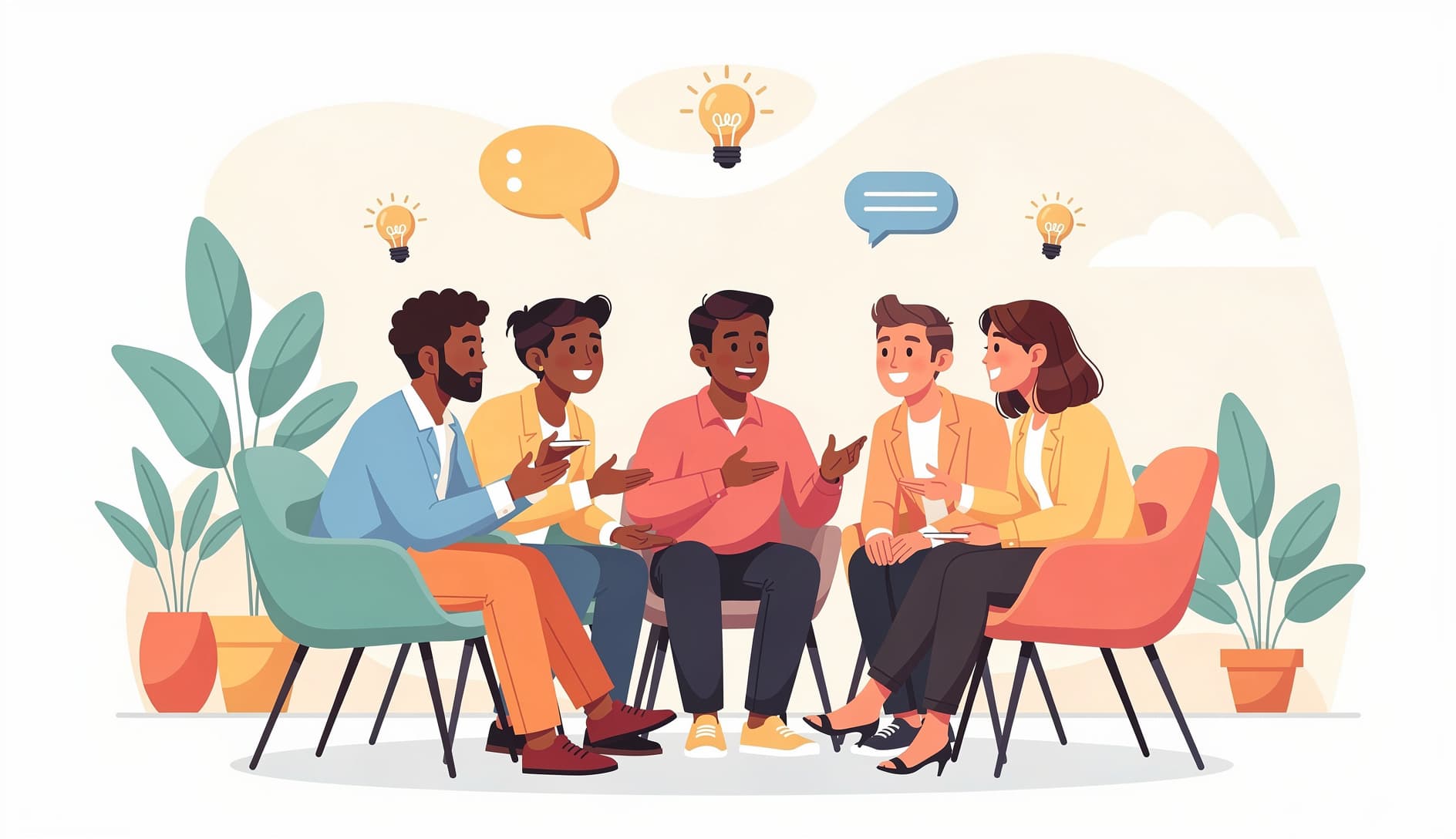
A diverse agile team sitting in a circle having an open, relaxed discussion with speech bubbles and lightbulbs floating above them, conveying trust and open communicationA diverse agile team sitting in a circle having an open, relaxed discussion with speech bubbles and lightbulbs floating above them, conveying trust and open communication Your team runs retrospectives every two weeks. You use planning poker for estimation. You have daily standups. And yet nothing improves. Retros produce the same surface-level feedback. Estimates are driven by whoever speaks first. Standups are status reports nobody listens to. The problem isn't your process. It's that people don't feel safe enough to use it honestly.

What psychological safety actually means

Amy Edmondson, the Harvard researcher who coined the term, defines psychological safety as "a shared belief that the team is safe for interpersonal risk-taking." That sounds abstract until you map it to specific fears that keep people quiet:
  • Fear of looking ignorant, so they don't ask questions
  • Fear of looking incompetent, so they don't admit mistakes
  • Fear of looking negative, so they don't raise concerns
  • Fear of being disruptive, so they don't challenge decisions
Every agile ceremony requires at least one of these risks. Estimation means admitting uncertainty. Retros mean naming failures. When these fears are active, your ceremonies become theater.

The data behind it

This isn't soft management theory. Google's Project Aristotle studied 180 teams and found psychological safety predicted team effectiveness better than team composition, individual talent, or process maturity. More recently, a 2024 study published in Empirical Software Engineering (423 participants) found that psychological safety directly drives software quality. When developers feel safe admitting mistakes, teams learn from those mistakes and invest that learning into better quality decisions. A 2022 study of 43 Norwegian software teams found a direct positive link between psychological safety and team performance, with autonomy being the strongest predictor of safety. Gallup's numbers back this up: 76% higher engagement and 27% lower turnover on psychologically safe teams.

How low safety breaks each ceremony

Estimation becomes anchoring

When a senior developer says "this is a 3," the room goes quiet. Junior devs who think it's an 8 say nothing. The team commits to an unrealistic sprint and then grinds through it silently. Story points and planning poker were designed specifically to prevent this. Simultaneous reveal exists so that nobody anchors to the first number spoken. But the mechanism only works when people trust that their honest estimate won't be second-guessed or used against them. Team members each holding up different numbered cards simultaneously during a planning poker session, showing diverse estimates without judgmentTeam members each holding up different numbered cards simultaneously during a planning poker session, showing diverse estimates without judgment Signs of low safety in estimation:
  • Estimates cluster around whatever the most senior person said
  • Nobody asks clarifying questions about unclear requirements
  • The team accepts sprint scope without pushback, then consistently misses it
  • "We'll figure it out" replaces honest discussion about unknowns

Retros become performance reviews in reverse

In healthy teams, retrospectives surface uncomfortable truths. "Our code reviews are rubber stamps." "We've been shipping without testing edge cases." "The deployment process is broken and we all know it." In low-safety teams, retros produce: "Maybe we could update the standup time?" Three sprints of that, and people stop contributing entirely. One practitioner described a quiet developer who stayed silent through three consecutive retros before finally speaking up with a suggestion that cut deployment time by 60%. That insight was available the whole time, just suppressed by the environment. Signs of low safety in retros:
  • Only logistics get discussed, never process or interpersonal issues
  • "Everything was fine" is the consensus, contradicted by sprint metrics
  • The same problems show up sprint after sprint with no progress
  • New or junior team members never speak

Standups become status reports

The shift is subtle. Instead of "I'm blocked and need help," people say "Working on the same thing as yesterday." Instead of "I underestimated this task," they say "Making progress." Nobody admits uncertainty because the standup has become a performance review, not a coordination tool. A 2025 study of 318 software professionals found that psychological safety is the mediating factor that makes standups actually work. Without it, daily standups are rituals with no value. Signs of low safety in standups:
  • Generic updates: "Same thing as yesterday"
  • Nobody reports blockers
  • Two or three people talk; everyone else gives one-line updates
  • People narrate busyness instead of reporting honestly

The zombie scrum problem
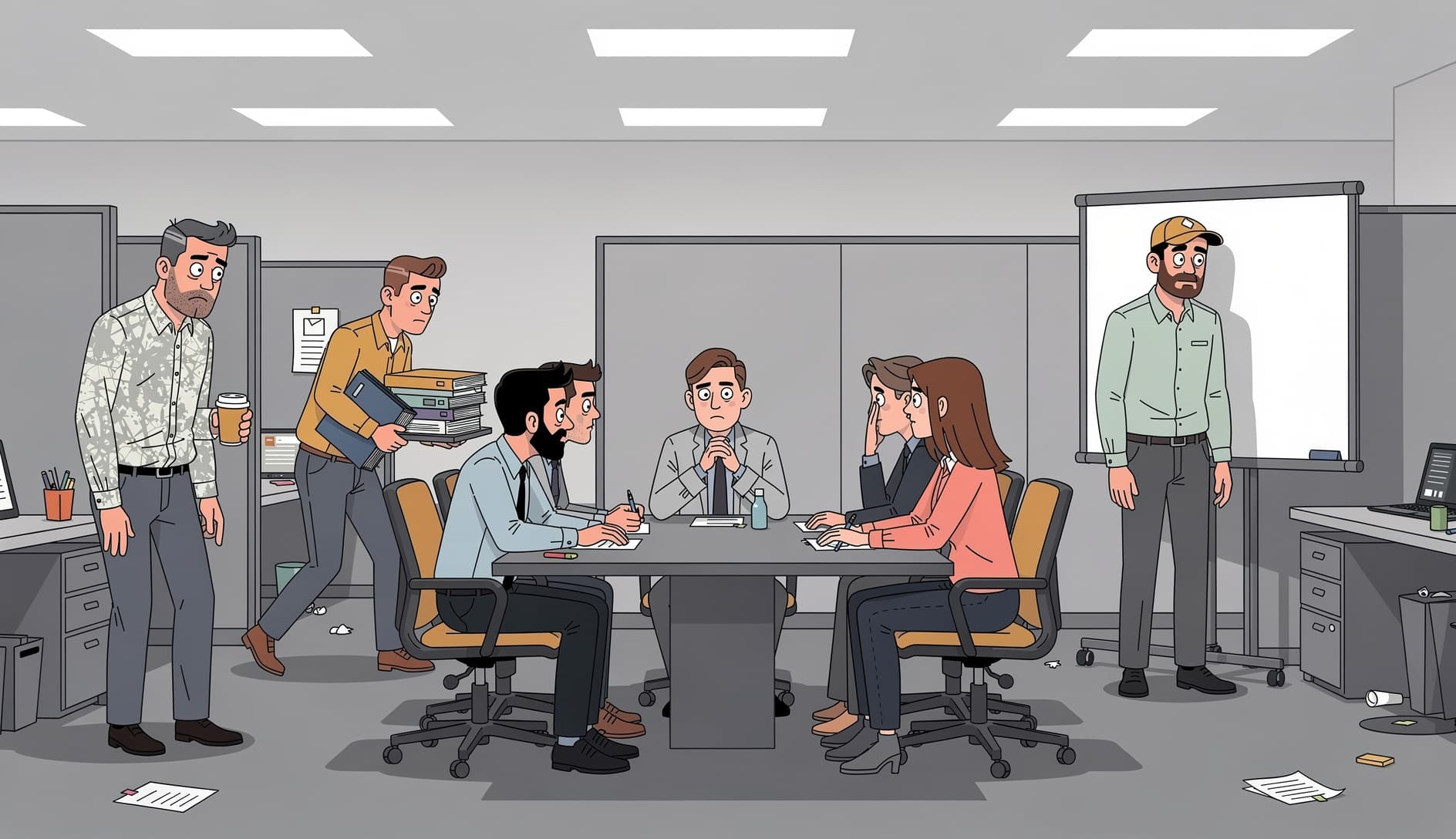
When safety is absent across all ceremonies, teams enter what practitioners call "Zombie Scrum." They go through every motion: standups happen, retros are scheduled, estimates are given. But the life is gone. People attend with visible disinterest, contribute less than they could, and treat every ceremony as an obligation rather than a tool. The root cause is that the organization hasn't created room for uncertainty or criticism. Without that room, agile processes can't self-correct. A group of developers walking like zombies through an office, mechanically going through the motions of their daily meeting rituals with glazed expressions, illustrated in a playful editorial styleA group of developers walking like zombies through an office, mechanically going through the motions of their daily meeting rituals with glazed expressions, illustrated in a playful editorial style

What actually fixes it

Structural changes

Use simultaneous reveal for estimation. Everyone commits before anyone sees the numbers. Anonymous voting goes further by hiding who voted what entirely, so authority bias doesn't factor in. Run a safety check before retros. Have each team member silently rate their sense of safety from 1 to 5. Track the number over time. If it stays below 3, the team has a systemic trust problem that no retro format will fix. Read the Retrospective Prime Directive. Open every retro with: "Regardless of what we discover, we understand and truly believe that everyone did the best job they could, given what they knew at the time, their skills and abilities, the resources available, and the situation at hand." It sounds cheesy. It also works, because it reframes the conversation around learning instead of blame. Reframe standup questions. Replace "What did you do yesterday?" (which invites productivity theater) with "What's blocking you?" or "Who needs help today?"

Behavioral changes

Go first. If you're a lead or scrum master, start every retro by sharing your own mistake from the sprint. "I should have escalated the dependency issue earlier. It cost us two days." When the person with the most authority admits a mistake, everyone else has permission to do the same. Don't shoot the messenger. When someone raises a concern, the response has to be engagement, not defensiveness. "Thanks for flagging that. What do you think we should do?" React badly once and people stop bringing things up. Practice one behavior per sprint. Pick something small and specific: "This sprint, everyone asks at least one clarifying question during refinement." Psychological safety builds through repeated small acts, not a single team offsite.

Async as a safety valve

Some people won't speak up in group settings no matter how safe the room feels. Async standups give them a written format where they can be honest without the pressure of everyone watching. Async estimation lets people think through their vote without time pressure or social cues. These aren't replacements for trust. They're bridges while you build it.

Measuring progress

Edmondson's 7-item survey (TPS-7) is the most validated tool for tracking psychological safety over time. But you can also watch for leading indicators without a formal survey:
  • Are blockers getting surfaced during the sprint, or only at sprint review?
  • Do people raise issues in group settings, or only in 1-on-1s?
  • Are retro action items changing from sprint to sprint, or recycling?
  • Do new team members speak up within their first few sprints?
A single measurement tells you very little. The trajectory over three to four sprints tells you everything.

The bottom line

Agile frameworks assume that teams will inspect and adapt honestly. Psychological safety is what makes that honesty possible. No tool, template, or ceremony format fixes a team that's afraid to speak up. But safety is buildable. It starts with whoever has the most influence in the room. Share your own mistakes first. Respond well when people take risks. Use structures like anonymous voting and async participation to lower the cost of honesty. Your ceremonies will improve when your team trusts that honesty won't be punished.

There's no fixed timeline. Teams that consistently practice vulnerability and respond well to risk-taking can see measurable improvement within 3-4 sprints. One bad reaction from leadership can reset progress significantly.

Tools like anonymous voting and async participation reduce the interpersonal risk of speaking up, which helps. But they don't replace trust. A team that relies entirely on anonymity to get honest feedback has a culture problem that needs direct attention.

Generally, no. The presence of someone with authority over career outcomes changes the dynamic, even with the best intentions. If a manager does attend, the team should unanimously agree to it, and the manager should participate as a peer, not an evaluator.

Psychological safety isn't about avoiding conflict. It's about making conflict productive. Safe teams disagree more openly because they trust that disagreement won't be punished. "Nice" teams often avoid hard conversations entirely, which is its own form of dysfunction.
Last Updated on 10/02/2026