Posts

Retrospective fatigue: what to do when your team is tired of retros
A burnt-out scrum master sitting alone in an empty meeting room with sticky notes falling off the wallsA burnt-out scrum master sitting alone in an empty meeting room with sticky notes falling off the walls
Matt Lewandowski

Matt Lewandowski

Last updated 16/02/202610 min read

You open the retro board. Three people type something. Two of them paste the same comment from last sprint. The rest stay silent, cameras off, waiting for the hour to end. Someone says "everything was fine" and nobody disagrees. You close the meeting five minutes early because there is nothing left to discuss. This is retrospective fatigue, and it is one of the most common reasons agile teams stop improving. A 2025 study from Otter.ai found that 72% of meetings are considered ineffective by their participants. Meeting fatigue has become a defining workplace issue, and retrospectives are not immune. The good news: retro fatigue is fixable. But you have to understand what is actually broken before you can repair it.

Signs your team has retro fatigue

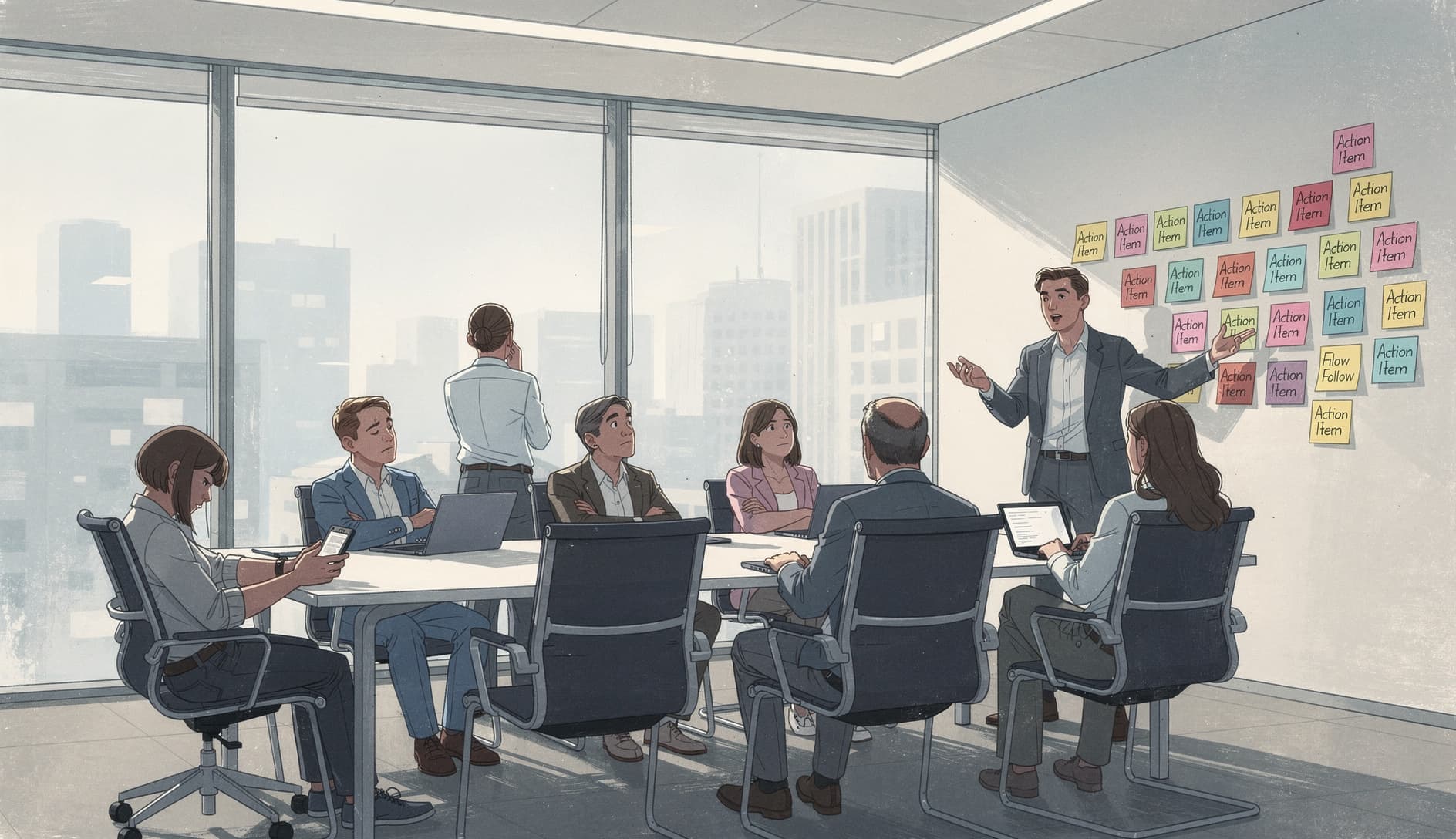
Retrospective fatigue does not announce itself. It creeps in gradually until the meeting feels like a formality rather than a tool. Here are the patterns that signal the problem. A disengaged team in a meeting room, some scrolling phones, only the facilitator speaking, recycled action items on the wallA disengaged team in a meeting room, some scrolling phones, only the facilitator speaking, recycled action items on the wall

The same three people talk

When only a handful of team members contribute, the retro has stopped being a team exercise. The rest have mentally checked out. This is often the first visible symptom, and it usually indicates that people have lost faith in the meeting's ability to produce change.

Action items recycle sprint after sprint

Open your retro board from three sprints ago. If the same action items appear in last week's retro with zero progress, the team has learned that nothing changes regardless of what they say. That lesson kills motivation to participate.

"Everything is fine" becomes the consensus

When the sprint clearly had problems but nobody raises them, you are seeing a trust gap. People either do not believe the retro is a safe space for honest feedback, or they have decided that honesty is not worth the effort because it will not lead to action. Both are symptoms of low psychological safety.

People skip the meeting entirely

Attendance drops. Calendar conflicts appear with suspicious regularity. This is the terminal stage of retro fatigue. When people would rather do anything else, the meeting has lost all perceived value.
72%

of meetings deemed ineffective

45min

average retro time wasted per sprint

3x

more likely to skip retros with no follow-through

Why retrospectives stop working

Recognizing the symptoms is step one. Understanding the root causes is what lets you fix them.

Same format, every sprint

Running Mad Sad Glad for the twentieth consecutive sprint is like eating the same lunch every day. It was fine the first time. By sprint twenty, people can predict how the conversation will go before it starts. Format monotony is the number one driver of disengagement in retrospectives.

No follow-through on action items

This is the deeper problem. When the team identifies something to improve and then nothing happens, the implicit message is: this meeting does not matter. Every unresolved action item teaches the team that participation is pointless. After enough sprints of this, even your most engaged team members will stop contributing.

Retros are too frequent for the team's maturity

Not every team needs a retrospective every sprint. Newer teams benefit from frequent reflection because they are still forming habits and norms. But mature teams with established processes may find that bi-weekly retros provide enough substance while weekly ones feel like forced reflection. The right cadence depends on your team, and finding that balance requires honest assessment.

Facilitator burnout

If the same person runs every retro, they burn out too. Preparation, facilitation, and follow-up take real energy. When the facilitator is tired, the meeting quality drops, which accelerates everyone else's fatigue. It becomes a downward spiral.

Recovery strategies that actually work

Retro fatigue is not a reason to cancel retrospectives. It is a signal that your approach needs to change. Here is what works. An energized team in a creative workshop session using colorful sticky notes, drawings, and digital toolsAn energized team in a creative workshop session using colorful sticky notes, drawings, and digital tools

Rotate your formats

The simplest fix is also the most effective. Stop using the same format every sprint. Rotate between different structures so that each retro feels like a different conversation.
🎭Themed retros

Use creative themes like Pirate Adventure, Space Odyssey, or Superhero Squad to reframe the same reflection questions in fresh ways. Browse ideas in our guide to agile retrospective ideas.

🎨Visual retros

Let team members draw their responses instead of typing text. Bad drawings get laughs, and laughter breaks tension faster than any facilitation technique.

🖼️GIF-based retros

Ask the team to express their sprint feelings through GIFs. It sounds silly. It works because it lowers the barrier to participation and adds genuine fun.

🤖Generated templates

Use a template generator to create a custom retro format based on any theme. Your team's favorite TV show, a local sports rivalry, or a holiday can all become retro frameworks.

You can also explore our full template library for hundreds of ready-to-use formats that your team can pick from directly.

Let the team pick the format

Instead of the scrum master choosing the format, give the team ownership. Post three options before the retro and let people vote. When people choose the format, they are more invested in the outcome. This single change can reignite engagement overnight.

Use async pre-work

Not everyone processes their thoughts well in real-time group settings. Send the retro prompts out a day before the meeting and let people submit their initial thoughts asynchronously. This does three things:
  1. Introverts participate equally. Written pre-work removes the pressure to think on the spot.
  2. The meeting is faster. You walk in with items already on the board and jump straight to discussion.
  3. Quality improves. People have time to reflect instead of blurting out whatever comes to mind first.

Track action item follow-through

This is non-negotiable. Every retro should start by reviewing the status of last sprint's action items. Did we do what we said we would do? If not, why?

Assign every action item to a specific person with a deadline

Review previous action items at the start of each retro

Limit action items to two or three per retro (fewer is better)

Celebrate completed action items publicly

Remove action items that the team decides are no longer relevant

When the team sees that retro outcomes lead to real changes, they start trusting the process again. Follow-through is the single most important factor in long-term retro health.

Rotate the facilitator

Stop making the scrum master run every retro. Let team members take turns. Different facilitators bring different energy, ask different questions, and notice different dynamics. It also distributes the preparation burden and gives people a deeper understanding of why facilitation matters.

Bring in fun elements

Fun is not a distraction from productive retrospectives. It is a prerequisite. Teams that laugh together are more willing to be vulnerable together. And vulnerability is what produces the honest feedback that makes retros worthwhile.

When to take a retro break vs. when to push through
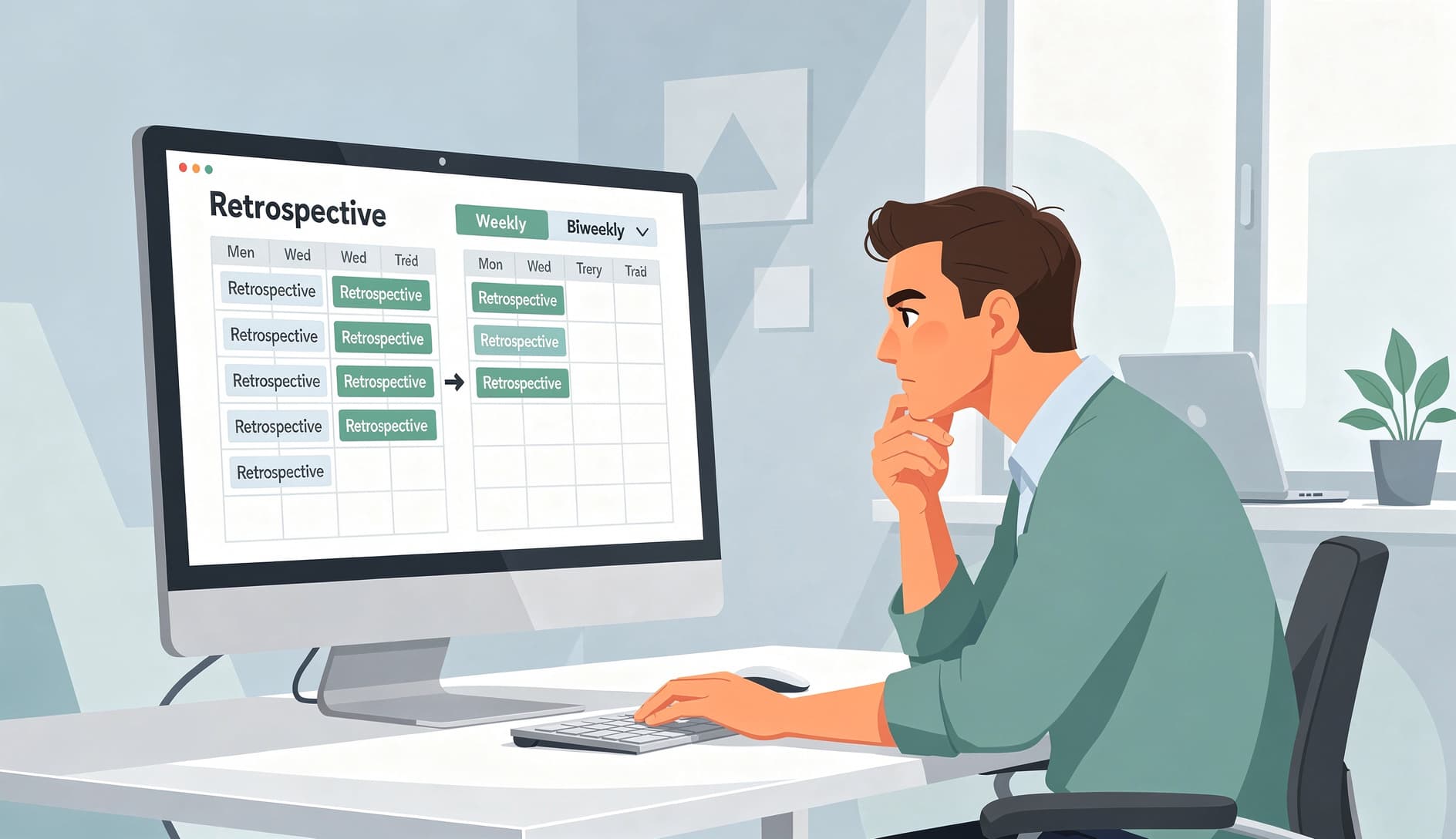
A calendar showing a retrospective being thoughtfully rescheduledA calendar showing a retrospective being thoughtfully rescheduled Sometimes the best thing you can do for your retros is to skip one. But knowing when to pause and when to persist requires judgment.

Take a break when...

1
The team just shipped something massive

After a major release or high-pressure sprint, people need recovery time, not another meeting. Give them a sprint off from the retro and let them decompress.

2
Multiple competing priorities are overwhelming the team

If the team is buried and the retro feels like one more thing on an impossible list, postpone it. A retro done under duress produces nothing useful.

3
You need time to fix the format

If you recognize that your retros are broken, take a sprint to research new formats, gather team feedback on what they want, and come back with a completely different approach.

Push through when...

1
The team is avoiding hard conversations

Skipping the retro when there are real problems to discuss sends the message that avoidance is acceptable. These are the retros that matter most, even if they are uncomfortable.

2
You just changed something significant

New processes, new team members, new tools. These are exactly the moments when reflection is most valuable. Do not skip the retro when there is the most to learn from.

3
Fatigue is caused by format, not by frequency

If the problem is boredom rather than burnout, the solution is a new format, not a break. Try something radically different and see if engagement rebounds.

A recovery plan you can start this sprint

If your retros are suffering right now, here is a concrete plan to turn things around.
Acknowledge the problem openly
Tell your team: "I have noticed our retros are not working well. I want to fix that." Honesty about the problem is the first step toward solving it.
Ask the team what they want
Send a quick async survey: What do you like about retros? What do you dislike? What would make them worth your time? Use the answers to redesign your approach.
Pick a completely different format
Use our template generator or browse retrospective ideas and pick something your team has never tried. The novelty alone will boost engagement for the first session.
Start with an icebreaker
Open the next retro with a fun, low-stakes icebreaker question. Get everyone talking before the real discussion begins.
Limit and track action items
Cap action items at two. Assign owners. Review them at the top of the next retro. Show the team that their input leads to actual change.

The bottom line

Retrospective fatigue does not mean retrospectives are broken. It means your current approach to them is. The meeting itself remains one of the most powerful tools in agile for continuous improvement, but only when it produces real outcomes and does not feel like a chore. Vary your formats. Follow through on action items. Let the team have a voice in how retros run. Add fun. Track progress. And when you need to, adjust the cadence rather than abandoning the practice entirely. Your team is not tired of improving. They are tired of going through the motions. Fix the motions, and the energy comes back. Ready to revitalize your retros? Explore Kollabe's retrospective tool for fresh templates, icebreakers, drawings, GIFs, and everything your team needs to make retros worth attending again.

Look at the trajectory. If your team was once engaged and has gradually disengaged, that is fatigue. If they have never been engaged, the problem is likely format or psychological safety, not fatigue. Try running a retro in a completely different format with an icebreaker and fun elements. If engagement jumps, it was fatigue. If it stays flat, dig deeper into team dynamics and trust.

Every two to four sprints at minimum. Some teams rotate every sprint and love it. Others prefer a format for a few sprints before switching. The key is to never let a single format become so routine that people can predict every moment of the meeting. Watch for signs of disengagement and switch before they set in.

Take it seriously but do not agree immediately. Ask what specifically they dislike. Usually the frustration is about wasted time and lack of follow-through, not about the concept of reflection itself. Address those specific issues first. If after genuine improvements the team still wants to stop, try a monthly retro instead of eliminating them completely. Removing retros entirely removes your team's best mechanism for self-correction.

Async retros work well for collecting input, especially from introverts and distributed teams. But the discussion phase, where the team debates priorities and decides on action items, usually benefits from real-time conversation. The best approach is hybrid: async pre-work for brainstorming followed by a shorter synchronous session for discussion and decision-making.