
Posts

How to run effective 1-on-1 meetings as an engineering manager

An engineering manager and a software engineer sitting across a small table with coffee, leaning in and talking openly, warm and attentive body language, soft office background, modern flat editorial illustration, vibrant colors
Kelly Lewandowski

Kelly Lewandowski

Last updated 07/06/20267 min read

The 1-on-1 is the highest-leverage meeting you run, and most engineering managers waste it. Thirty minutes a week with each report is enough to catch a resignation before it's typed, unblock a project, or redirect a career. But only if you stop using it as a verbal standup. Here's how to run 1-on-1s that engineers actually look forward to.

more likely to be engaged when reports have regular 1-on-1s

21%

productivity lift on teams with meaningful 1-on-1s

87%

rate purpose-driven meetings as valuable, vs 54% for generic check-ins

Why most engineering 1-on-1s fail
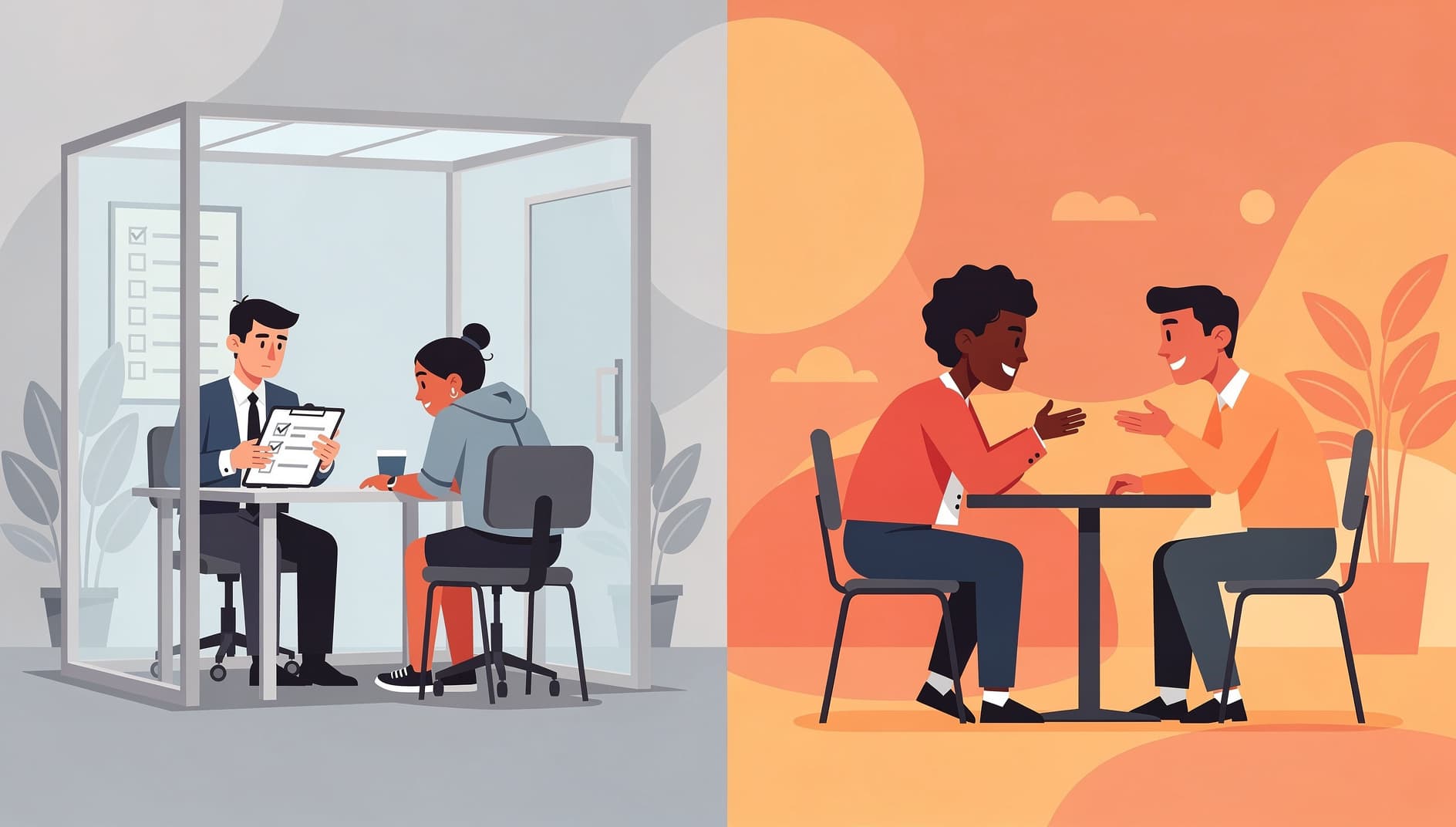
The default failure mode is the status update. You ask "what are you working on?", the engineer recites their Jira board, you nod, and you both leave with nothing you couldn't have read in a ticket. That information already lives in your standup, your board, and your async updates. Spending your one protected conversation re-narrating it tells your report the meeting is for your benefit, not theirs. Split-scene illustration contrasting two conversations: on one side a manager robotically reading from a checklist while a bored engineer slumps, on the other side two people in genuine animated discussion, modern flat editorial illustration, vibrant colors

Set a cadence and protect it

Pick a rhythm and treat it as immovable. Cancelling a 1-on-1 because something "more important" came up is the single fastest way to signal that your report isn't a priority.
Weekly
The default for most reports. Frequent enough that small problems surface before they calcify.
Biweekly
A reasonable floor for senior, stable engineers who prefer space. Don't go longer.
30 minutes
Enough for a focused conversation. Stretch to 45–60 for new reports or career discussions.
Reschedule when you have to, but never silently cancel. Moving it proves the commitment is real.

Hand over the agenda

It's their meeting, not yours. The most reliable upgrade you can make is to stop owning the agenda. Keep a shared running doc per report. Both of you drop topics in throughout the week as they come up, so neither of you is staring at a blank page at 2pm. Their items come first. If you've got feedback or context to share, it goes after theirs, not instead of it.

A structure that works

You don't need a rigid script, but a loose shape keeps you from defaulting to status. This four-beat structure adapts the classic People / Product / Process framework and reserves room for growth:
  1. Check in as humans (5 min)
    Start with the person, not the work. How are they actually doing? This isn't filler — it's where you notice the early signs of burnout long before they show up in velocity.
  2. Their agenda first (10 min)
    Walk their topics. Blockers, frustrations, decisions they're stuck on, things they want your read on. Your job here is mostly to listen and remove obstacles.
  3. Your topics (5–10 min)
    Feedback (both directions), context they're missing, team alignment. Give feedback close to the event, not saved up for review season.
  4. Growth and next steps (rotating)
    Every third or fourth session, zoom out to career and development. Close by writing down who's doing what before next time.
The ratio matters more than the timing: your report should be talking more than you are. If you're monologuing, you've turned their meeting back into yours.

Ask questions that go past status

Good questions are the whole game. The right one surfaces something the engineer wouldn't have volunteered. Rotate across these areas instead of asking "any blockers?" forty weeks in a row:
Getting to know
"What's something about how you like to work that I should know but probably don't?"
Career
"If you imagine your role in two years, what's different about it?"
Collaboration
"Who on the team do you learn the most from right now? Who do you wish you worked with more?"
Feedback
"What's one thing I could do differently that would make your work easier?"
Wellbeing
"What's draining your energy lately that isn't obvious from the outside?"
When you're not sure what to ask, our free 1-on-1 Question Generator builds a tailored set from your role and the topic you want to explore — useful for a first 1-on-1, a promotion conversation, or breaking out of a rut.

Make career a recurring topic, not an annual event

Career growth is the perk employees rank above almost everything else, and "I didn't see a future here" is one of the most common reasons strong engineers leave. You can't fix that in a year-end review. Every few sessions, spend the time on growth: what they want to be doing, what's blocking them, the next concrete skill or project that gets them there. Turn the vague ambitions into something trackable — a SMART goal beats "get better at system design" because you can both tell whether it happened.

Close the loop

A 1-on-1 that generates no follow-through trains your report to stop bringing things up. Write down action items as they come up — yours and theirs — and revisit them at the top of the next session. The act of following up is the proof that the conversation mattered. None of this works without trust. If your reports don't feel safe being honest, you'll get the polished version of every answer, and the real problems stay hidden. That foundation is worth building deliberately — see our guide to psychological safety on agile teams.

Weekly is the default for most reports. Biweekly is a reasonable floor for senior, stable engineers, but going longer than two weeks lets small issues grow before you hear about them.

Thirty minutes works for a weekly cadence. Extend to 45–60 minutes for new reports who are still building context, or when you're having a dedicated career conversation.

Project status. If the information lives on your board or in your standup, it doesn't need your one protected conversation. Use the time for blockers, feedback, growth, and wellbeing instead.

Treat the silence as a signal, not a green light. Keep a shared agenda doc so topics accumulate during the week, and arrive with a few open questions ready to rotate through different areas.