Posts

The Best Free Planning Poker Tools in 2026

Flat vector illustration of a remote software team estimating together, each holding up a colorful voting card toward a shared screen, clean editorial style
Matt Lewandowski

Matt Lewandowski

Last updated 19/07/20269 min read

Planning poker tools all look similar in a screenshot: cards, a reveal button, an average. The differences that matter live in the free-plan fine print: how many people can vote, how many rounds you get, whether anyone needs an account, and what happens to your history. This guide compares the top five free planning poker tools in 2026 on exactly those dimensions. All pricing and limits were verified in July 2026.

The free plans at a glance

ToolFree planThe catchPaid from
KollabeUnlimited rooms, 10 participants each7-day room history; integrations are paid$29/mo per team, unlimited users
Planning Poker OnlineUnlimited games9 votes and 5 issues per game$30/mo per facilitator
PlanITpokerUnlimited use, all featuresAd-supported, 7 users per roomFree (ads)
Parabol2 teams, most featuresAccounts required; structured flow$8/user/mo
ZenhubBasic plan after 14-day trialGitHub-only; AI features paid$8.33/user/mo

What actually matters in a free estimation tool

Setup friction

The best sessions start in seconds. If participants have to register before they can vote, you'll feel it every single sprint.

📏The free-plan ceiling

Vote caps, issue caps, participant caps, or ads. Every tool picks one; pick the tool whose ceiling your team won't hit.

🔄Where estimates land

Voting is half the job. Whether winning votes flow back into Jira, Azure DevOps, or GitHub decides how much manual copying you sign up for.

1. Kollabe

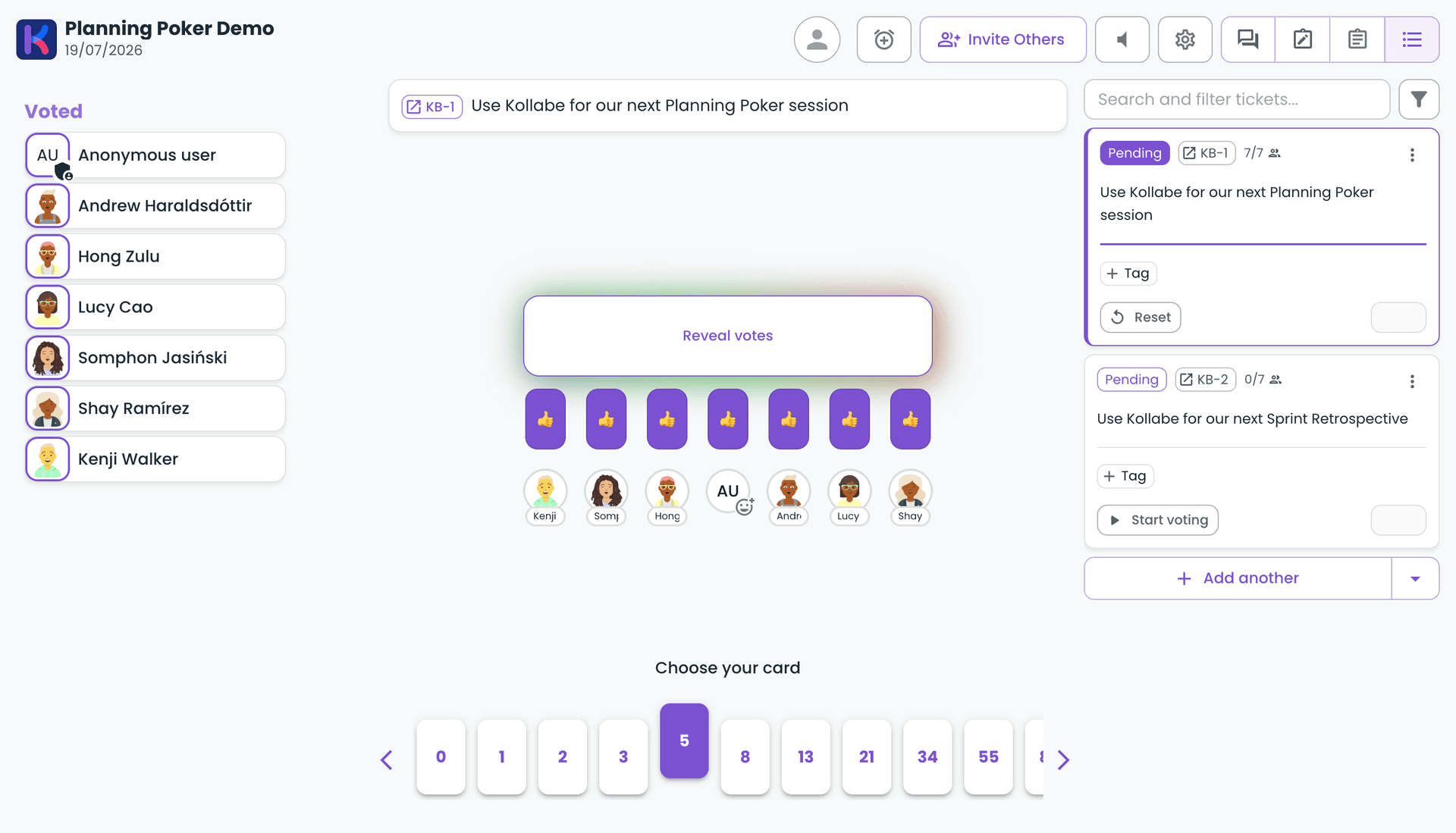
Kollabe earns the top spot with a free plan built around zero friction: create a room in about ten seconds, share the link, and estimate — no registration for the host or the participants, and no cap on how many rooms you create. The limits are 10 participants per room and a 7-day room history. It's also the most transparent tool on this list about usage: more than 5.4 million votes across 180,000+ sessions, with the aggregate patterns published on the planning poker statistics page. Free plan:
  • Unlimited rooms, up to 10 participants each
  • No signup required for host or participants
  • Fibonacci, modified Fibonacci, T-shirt, and fully custom decks with per-card descriptions
  • Anonymous voting and async voting
  • Built-in chat, reactions, and GIFs
  • 7-day room history
Paid ($29/month per team, flat): unlimited participants, unlimited history, bi-directional Jira, Azure DevOps, and Linear sync, data export, AI tools, permission management, plus a public API and MCP server for automation.
✅ Pros⚠️ Cons
Instant setup, no registration for anyoneIssue-tracker sync is premium
No cap on rooms or rounds7-day history on free
Flat team pricing, not per-user10 participants per free room
Screenshot of a live Kollabe planning poker room with voting cards and participants

2. Planning Poker Online

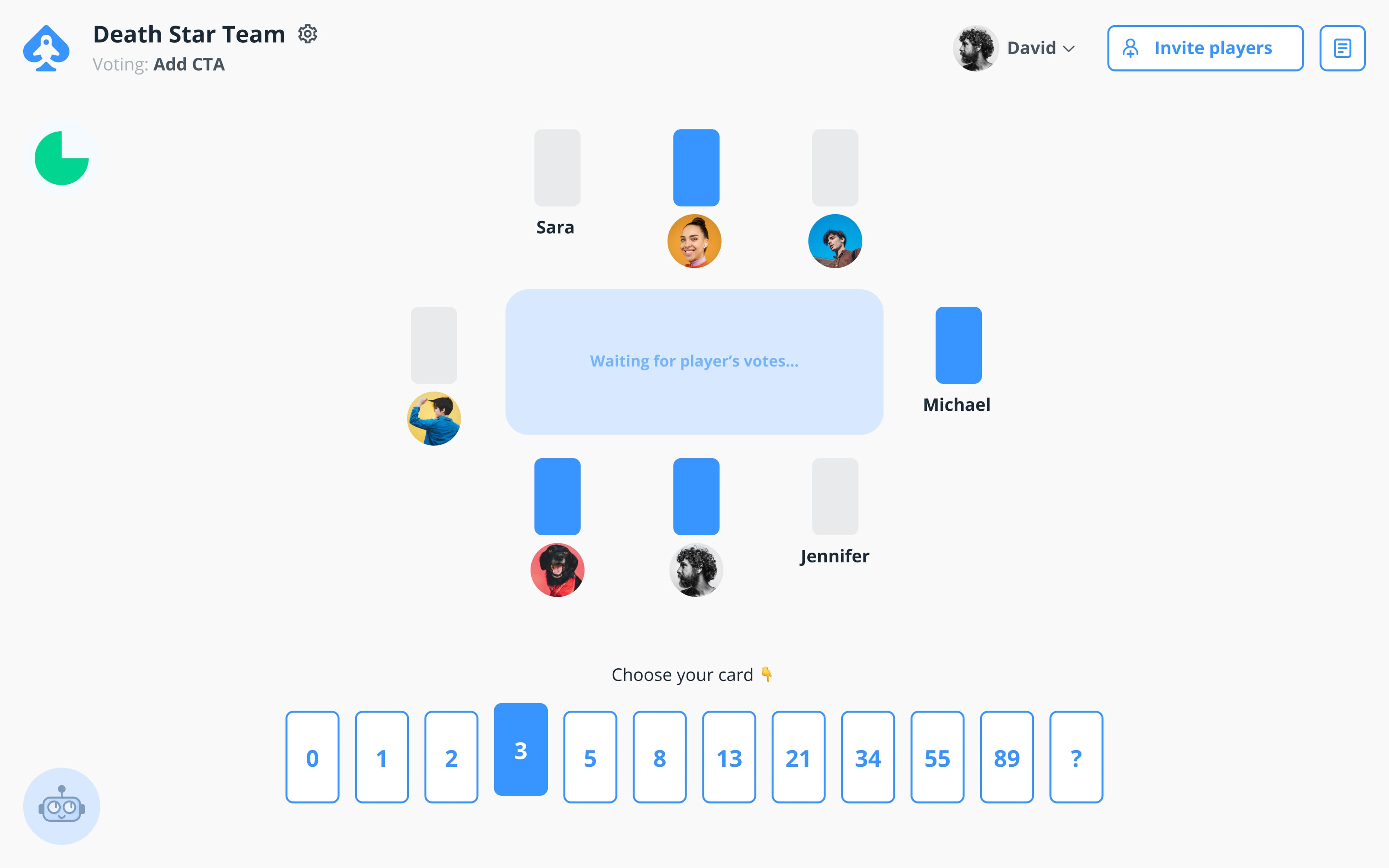
Planning poker in Planning Poker Online Planning Poker Online positions itself as the enterprise-grade option, with ISO 27001 certification that's unique in this category. The free tier is more of a taster: 9 votes and 5 issues per game, though you can start unlimited games and participants don't need accounts. Free plan: unlimited games, 9 votes and 5 issues per game, no participant signup.
✅ Pros⚠️ Cons
ISO 27001 certified9 votes / 5 issues per free game
Clean, professional interface$30 per facilitator per month adds up
No participant accounts neededJira sync is a separate marketplace plugin

3. PlanITpoker

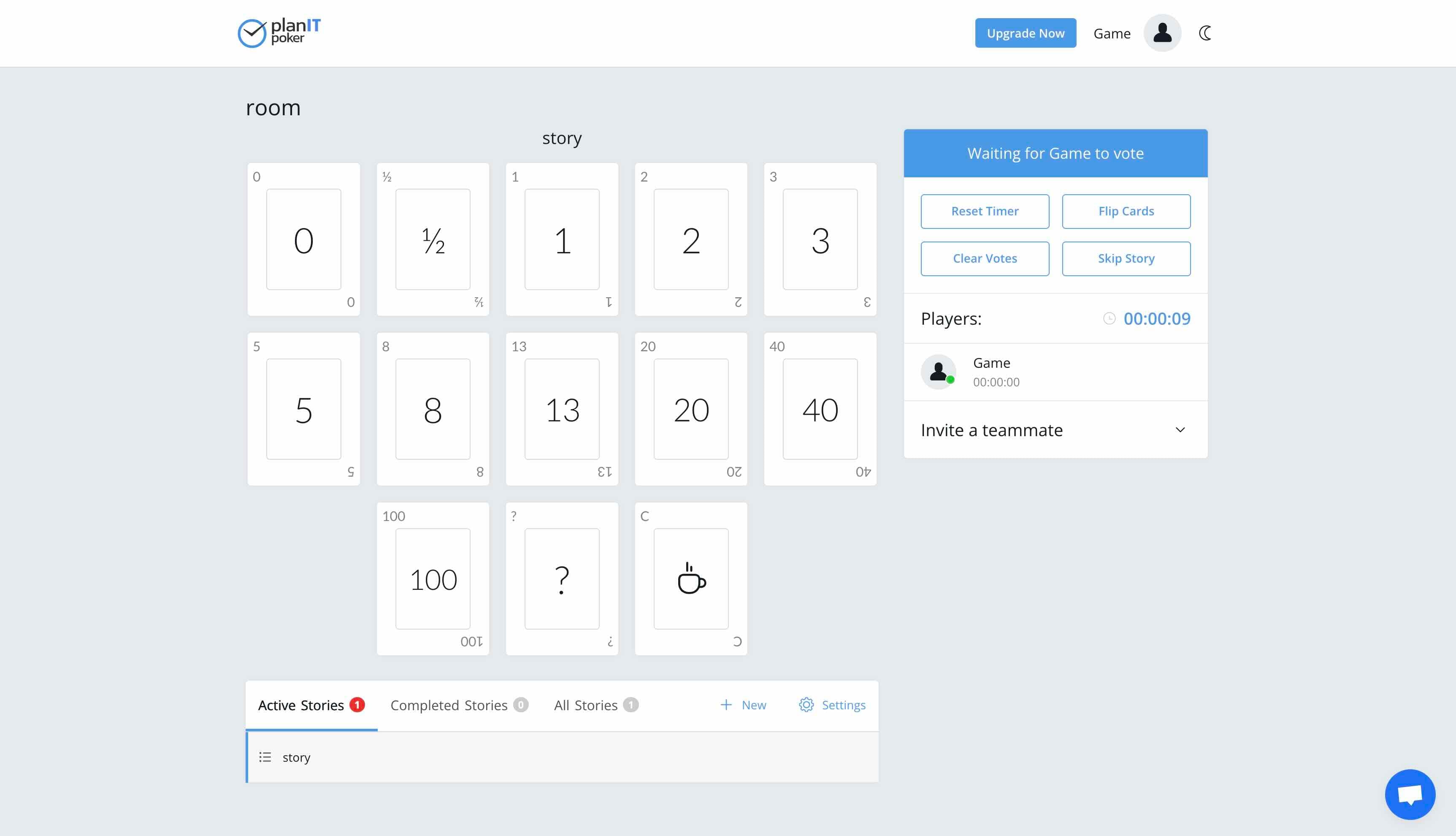
Planning poker in PlanITpoker PlanITpoker is the fully free option: no payment tier at all, funded by ads. All features are available without limits on sessions, with rooms capped at 7 users. The interface shows its age, but for teams on a strict budget it simply works. Free plan: everything, ad-supported, 7 users per room.
✅ Pros⚠️ Cons
Genuinely free, no paid tierPersistent ads, no way to remove them
No registration option for quick startsDated interface
Jira XML import7-user room cap; few integrations

4. Parabol

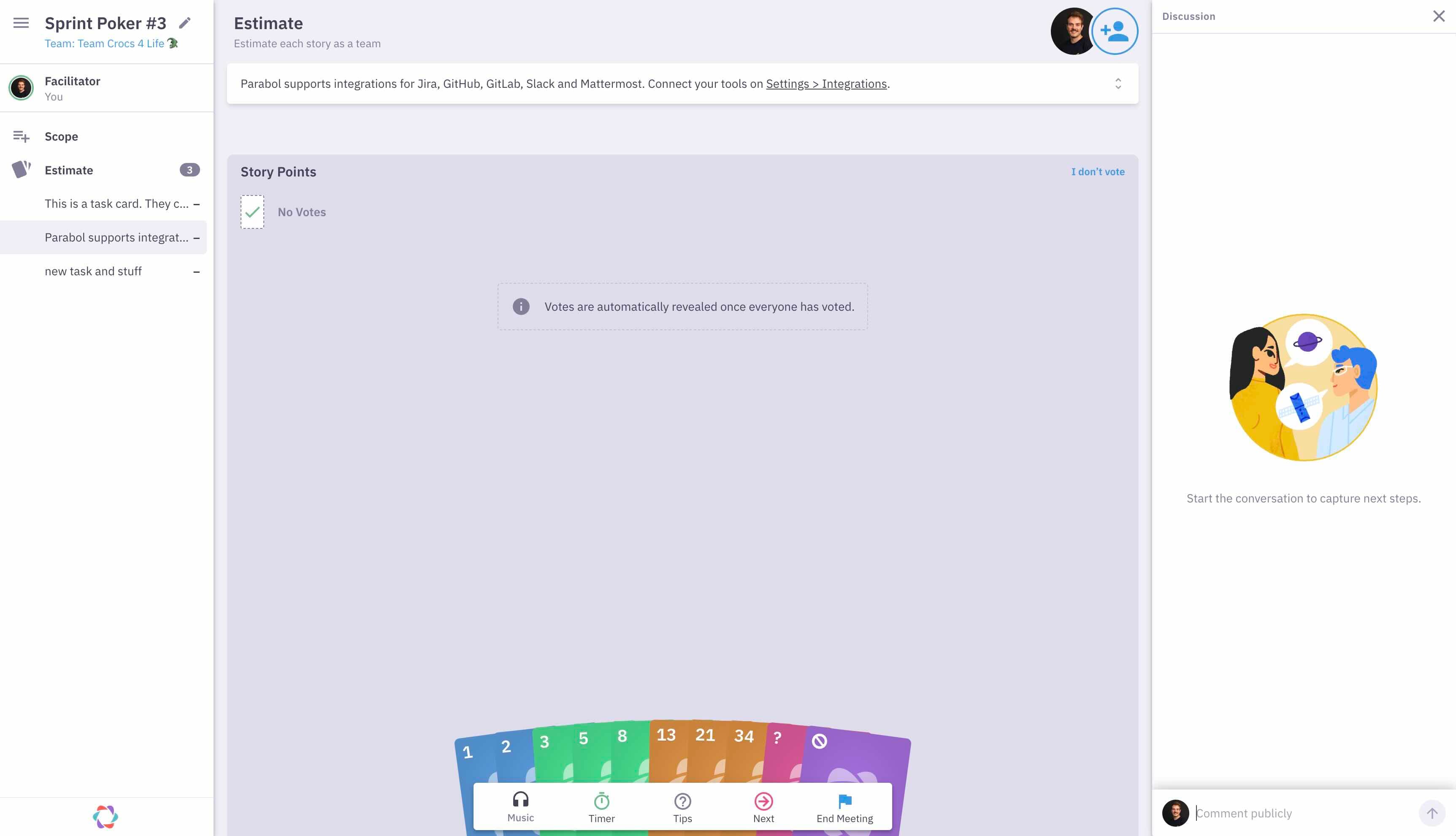
Planning poker in Parabol Parabol wraps estimation into a broader open-source meeting platform that also covers retros and standups. The free plan supports two teams with most features, and the sprint poker flow syncs with Jira, GitHub, GitLab, and Azure DevOps. Every participant needs an account, which trades setup speed for structure. Free plan: 2 teams, most core features.
✅ Pros⚠️ Cons
Open source, self-hosting optionAccounts required for all participants
Strong integration ecosystem$8/user/month at scale
Covers retros and standups tooGuided flow can feel heavyweight

5. Zenhub

Planning poker in Zenhub Zenhub lives inside GitHub, which makes it the natural pick for teams that never want to leave their issues. Planning poker is asynchronous by design: teammates vote on their own time and the final estimate syncs straight onto the GitHub issue. After a 14-day trial of the Teams plan, you land on a basic free plan. Free plan: basic features after the Teams trial ends.
✅ Pros⚠️ Cons
Native GitHub integrationOnly works with GitHub
Async voting with auto-synced estimates$8.33/user/month (annual) for Teams
AI sprint analysis (paid)Free plan is thin after the trial

Which one should you pick?

Your situationBest fit
You want to start estimating in the next 60 secondsKollabe
You need compliance certificationsPlanning Poker Online
You have zero budget and don't mind adsPlanITpoker
You want open source and self-hostingParabol
Your whole workflow lives in GitHubZenhub
If you're weighing which scale to use, T-shirt sizing vs Fibonacci covers the trade-offs, and why Fibonacci story points work explains the sequence everyone ends up trimming anyway.

It varies a lot. Kollabe's free plan does not cap the number of rooms you can create, but each room expires after seven days and each room is limited to ten participants. Other free tools trade those dimensions off differently, with vote caps per game, ad-supported access, or thin post-trial plans. Read each provider's free-tier limits side by side before you commit, because what counts as "free" differs more than the marketing pages suggest.

Not for Kollabe. The facilitator who creates the room and the participants who vote can both use the tool without signing up; you share the room link and the team joins. Parabol and Zenhub require accounts for every participant, which adds friction if your team has rotating contractors or guest stakeholders.

Free is the wrong tier for Jira sync on most tools, including Kollabe. Kollabe supports bi-directional Jira sync, where winning votes update story points in Jira automatically (and equivalent sync for Azure DevOps and Linear), but those integrations are part of the Premium plan. If Jira sync on a strictly free plan is the requirement, check each tool's free-tier integration list one by one; most lock integrations behind a paid tier.

Kollabe supports asynchronous voting, so team members can cast their estimate at their own time and the room reveals when everyone is in. Zenhub's poker is async by design. If your team spans more than two or three time zones, async support is the feature that decides whether the tool actually works or whether someone always ends up dialling in at 11pm.

Most support Fibonacci and T-shirt sizing out of the box. Kollabe also lets you build a fully custom deck with a description per card, which is useful when the team is voting on risk, confidence, or business value rather than raw effort. Across 5.4 million votes on the platform, the most popular custom deck is simply Fibonacci capped at 13.

There is usually a tradeoff. PlanITpoker is ad-supported. Planning Poker Online caps votes per game. Some tools are per-user once you cross a small seat count, which gets expensive on a fifty-person team. Kollabe prices per team rather than per user, which usually works out cheaper for a single growing team but can be more expensive for an organisation running several small teams in parallel.

Conclusion

Each of these five tools earns its spot for a different team: compliance, zero budget, open source, or GitHub-native workflows. For most agile teams, though, Kollabe is the strongest starting point in 2026: room-to-voting in ten seconds, no accounts for anyone, no cap on rooms, and flat team pricing when you outgrow the free plan. Features and pricing verified July 19, 2026 against each vendor's published plans. Check their sites for changes.