Posts

The Best Free Retrospective Tools in 2026

Diverse team in an Agile retrospective meeting
Matt Lewandowski

Matt Lewandowski

Last updated 05/09/20259 min read

Retrospectives are the heartbeat of agile teams, fostering continuous improvement and collaboration. In these dedicated sessions, teams reflect on what went well, what needs improvement, and how to move forward more efficiently. As we enter 2026, free retrospective tools have evolved significantly, leveraging AI, real-time engagement, and powerful analytics. Below, we compare the top 5 free tools, highlight their strengths, and give you everything you need to pick the best solution for your team.

What Is a Retrospective?

A retrospective is a meeting where teams evaluate their recent work cycle (e.g., sprint or project phase). By identifying successes, pain points, and actionable next steps, teams can improve processes and collaboration. This results in higher productivity, better-quality outputs, and a more positive team culture.

What Makes a Great Retrospective Tool in 2026?

High-quality retrospective tools have three key pillars:
🎯Core Functionality

Real-time collaboration, flexible anonymity settings, robust voting systems, and action item tracking.

💫Engagement Features

Interactive elements (GIFs, emojis, media), team-building add-ons, customizable visuals, and real-time feedback loops.

📊Analytics & Insights

Participation metrics, sentiment analysis, progress tracking, and team health monitoring.

Keeping these factors in mind will help you choose a solution that not only collects feedback but also turns that feedback into actionable insights.

Top 5 Free Retrospective Tools Compared

Below are our picks for the best free retrospective tools in 2026, each with a short overview, feature breakdown, and "pros & cons" to help you decide.

🏆 1. Kollabe

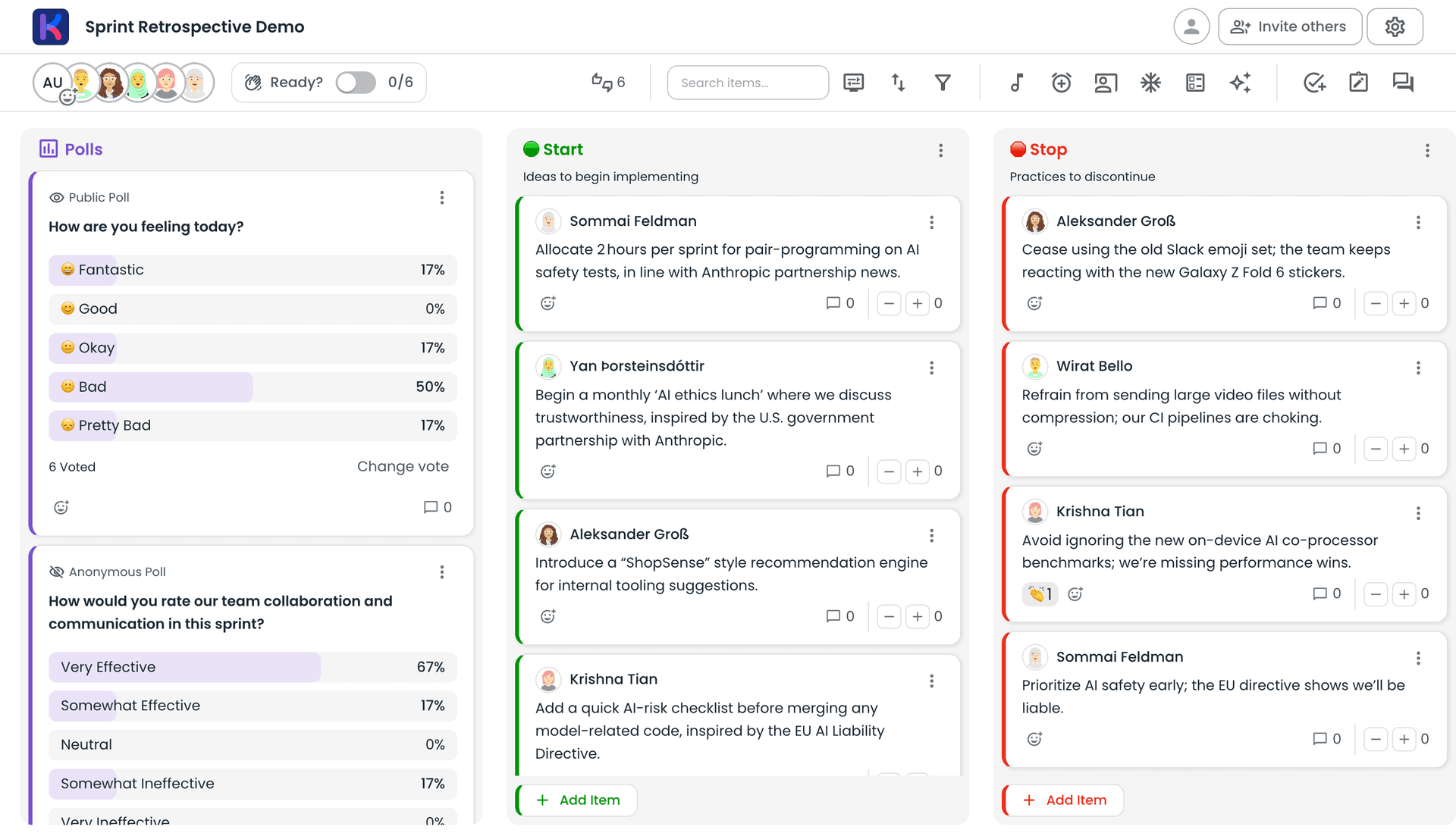
The Future of Agile Retrospectives Kollabe revolutionizes agile retrospectives with powerful AI capabilities and an engaging user experience. It leads the market in 2026 for its innovative features and extensive free plan.

✨ Standout Features

Key FeatureDescription
🤖 AI Template GeneratorInstantly create custom templates tailored to your needs
📊 Smart SummariesAutomated meeting insights and summaries
📈 Sentiment AnalysisTrack team mood and engagement trends
🎨 Rich MediaSupport for custom music, backgrounds, GIFs, and emojis
🌟 Kudos SystemRecognize and celebrate individual contributions
💬 Interactive ToolsReal-time chat and reactions
🔒 Flexible PrivacyChoice between anonymous and named inputs
Live FeaturesReal-time typing and updates
💾 Export OptionsExport in PDF, Markdown, or JPEG

Innovation Spotlight

Kollabe's AI Template Generator is a true game-changer. Simply input a theme or goal, and the system provides a customized retrospective template—like "Start, Stop, Continue" or the "3Ws." This saves time and ensures each retrospective is perfectly tailored to your team. Creating an AI retro template in Kollabe

Getting Started with Kollabe

  1. Sign up
  2. Create retrospective
    Select 'Create Retrospective' and choose an AI-generated template (or pick from thousands of existing templates)
  3. Invite team
    Invite your team via a shareable link
  4. Start your retro
    Kick off your retro and watch your team leave feedback in real time

Pros & Cons

✅ Pros⚠️ Cons
Advanced AI features for custom retrosSome features may feel complex for first-time users
Fun engagement options (GIFs, emojis)Team size limit on free plan (10 users)
Comprehensive analytics & privacy controls7-day free meeting retention might be short for some

Free Plan Value

  • Team Size: Up to 10 participants per retro
  • Retention: 7-day retro retention; no monthly cap on retros
  • Templates: Thousands of built-in templates
  • Features: Core retro features. AI tools (template generator, smart summaries, sentiment analysis), data export, and permission management are Premium.

Why Teams Love It
"Kollabe is a ton of fun to use. Our team loves the GIFs and emojis—it really boosts engagement."
"We've used Kollabe for years. It's streamlined our retrospectives and keeps getting better!"

🥈 2. Neatro

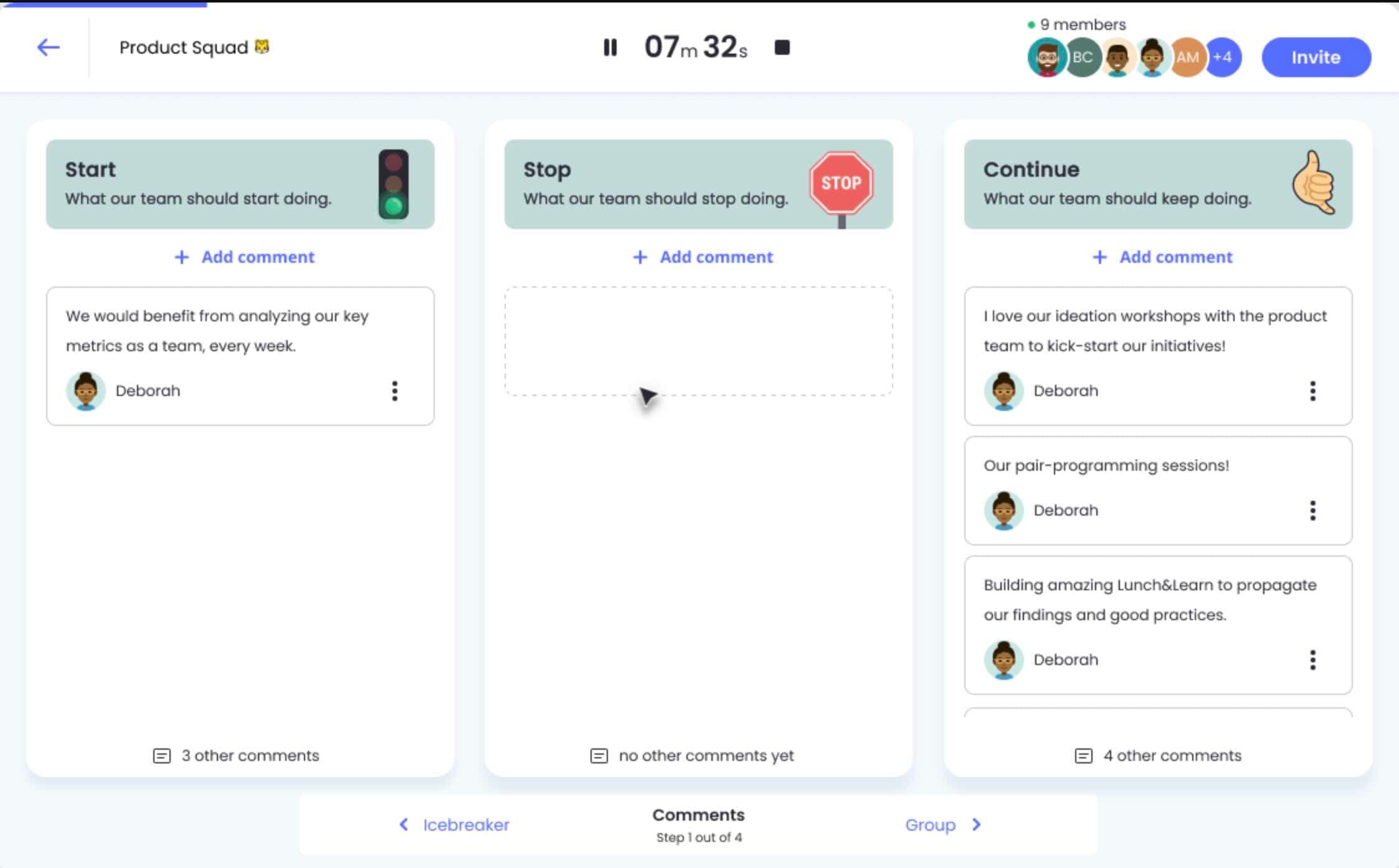
Solid Basics With Room for Growth Neatro retrospective tool Neatro earns its reputation by keeping things simple. While it lacks some advanced AI features, it provides a clean, straightforward environment that's perfect for teams who just want the essentials.

Feature Comparison

CategoryAvailable Features
Core- Intuitive board management
- Basic template library
- Simple voting mechanism
Collaboration- Real-time updates
- Basic commenting
- Team member tracking
Management- Action item creation
- Export options
- Simple timer

Pros & Cons

✅ Pros⚠️ Cons
Clean, user-friendly interfaceNo advanced AI features
Reliable performanceLess flexible for large or complex teams
Stable free plan for small to medium teamsBasic analytics only

Free Plan Details

  • Team Size: 10 members
  • Retro History: 30-day retrospective history
  • Templates: Basic library included
  • Export: Standard formats
  • Action Tracking: Basic checklist
Neatro's simplicity and reliability make it a great choice for teams looking to get started quickly without excess features. See how Kollabe compares to Neatro for teams needing more advanced capabilities.

🥉 3. Reetro

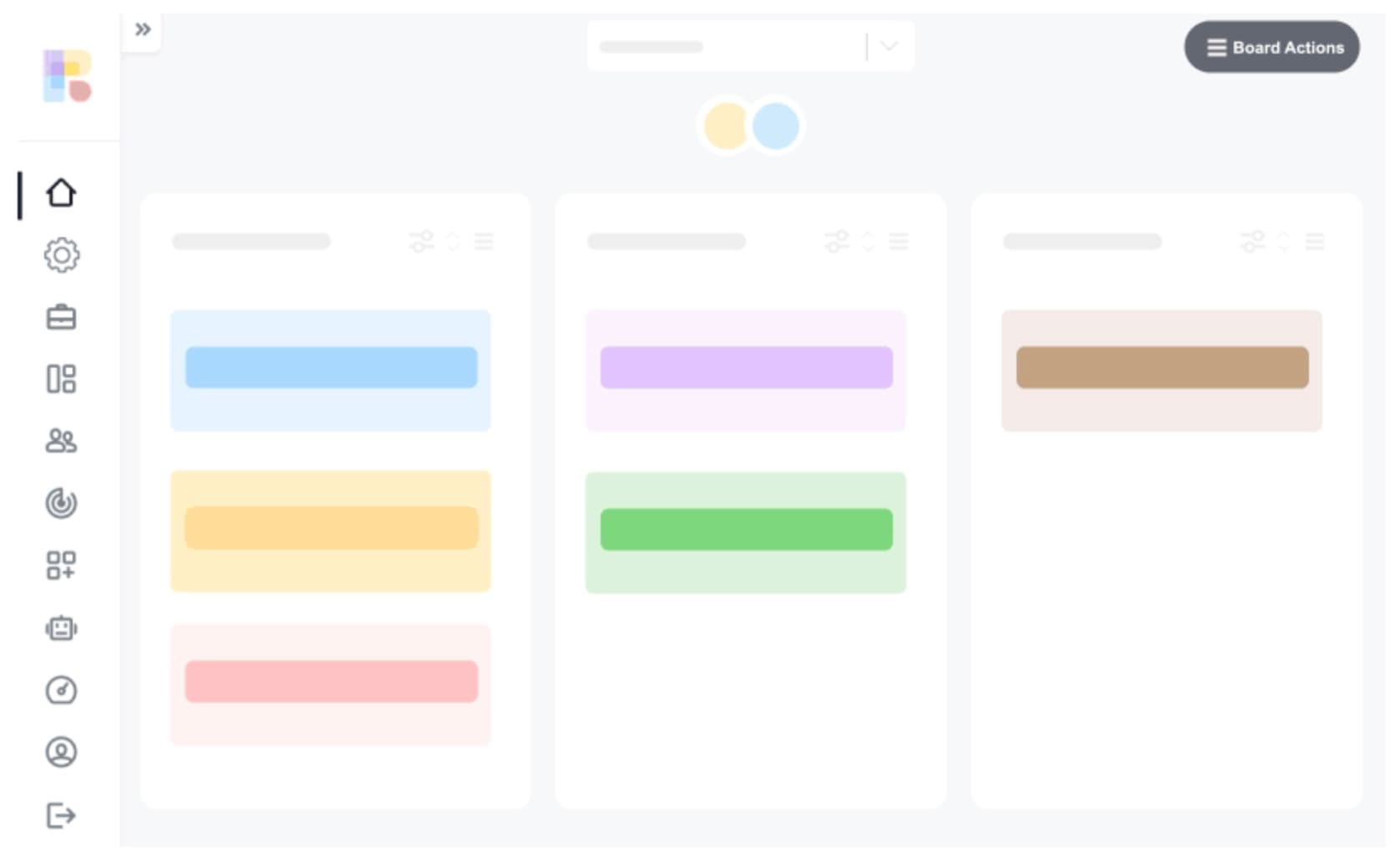
Balancing Features With Simplicity Reetro retrospective tool Reetro strikes a nice balance between essential features and a streamlined interface. It's especially notable for its multi-team support in the free tier—ideal for organizations managing several small teams.

Feature Breakdown

CategoryCapabilities
Team Management- Multi-team support
- Basic team analytics
- Custom settings
Meeting Tools- Voting system
- Basic timer
- Action tracking
Collaboration- Simple board sharing
- Notifications
- Team controls

Standout Elements

  • Multi-team support in the free tier is a standout, allowing you to create separate retros for up to 5 teams without upgrading.

Pros & Cons

✅ Pros⚠️ Cons
Supports up to 5 teams in free planBasic feature set might be limiting
Straightforward interface for quick adoptionLimited customization tools
Useful for managing multiple small teamsLacks robust analytics

Free Plan Overview

  • Teams: Up to 5 teams
  • Team Members: 10 members per team
  • Templates: Basic selection
  • Voting: Standard system
  • Action Tracking: Simple tasks
Reetro stands out if you're juggling multiple squads and need a no-frills solution that can handle all of them in one dashboard. Compare Reetro vs Kollabe to see how AI-powered features can enhance your team retrospectives.

4. EasyRetro

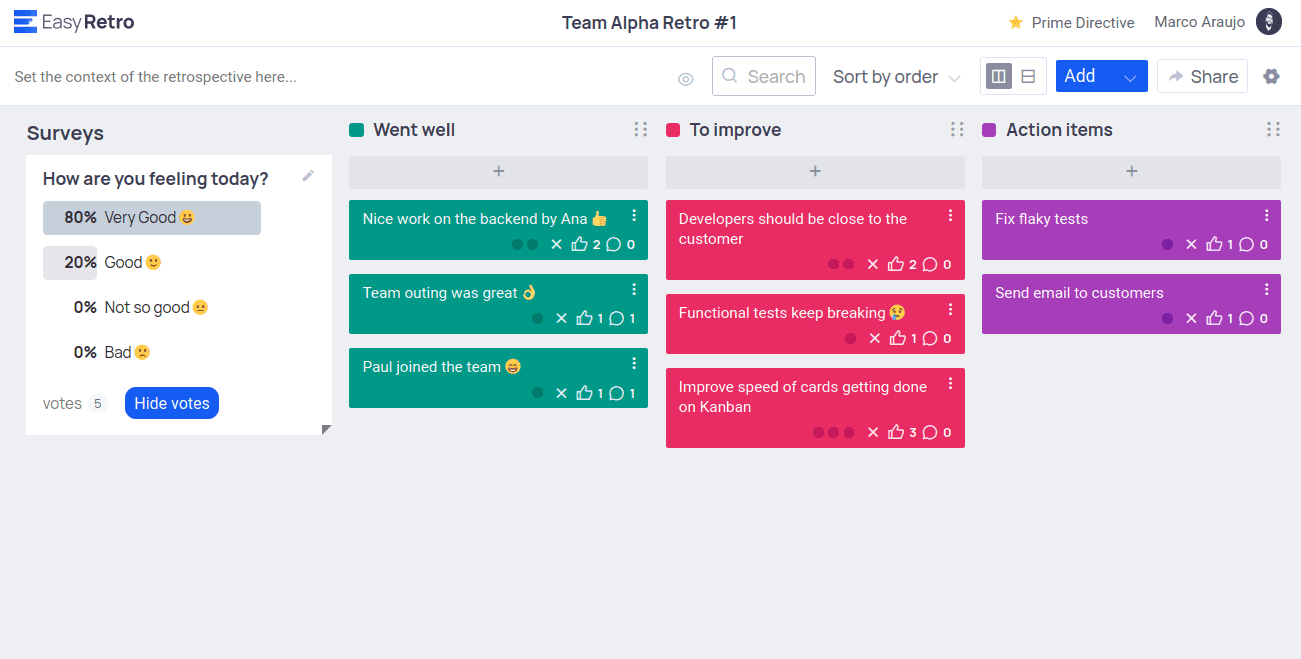
Simplicity First Approach easyretro retro tool EasyRetro lives up to its name by prioritizing a clean, no-frills experience. It's often the go-to for teams new to agile retrospectives, as it minimizes setup time and focuses on ease of use.

Core Capabilities

CategoryFeatures Provided
Basic Tools- Simple board creation
- Basic voting
- Quick setup
Collaboration- Real-time updates
- Easy sharing
- Basic exports
Management- Board organization
- Basic templates
- Simple tracking

Pros & Cons

✅ Pros⚠️ Cons
Extremely easy setupFeature set may be too limited for bigger teams
Newcomer-friendly interfaceFewer advanced options (like AI or analytics)
Works well for small, ad-hoc retrosOnly 3 boards per month in free plan

Free Plan Specifics

  • Boards: 3 boards per month
  • Team Members: Unlimited
  • Features: Basic voting & templates
  • Export: Simple download options
  • Storage: Limited capacity
If you're just dipping your toes into retrospectives or have a small team, EasyRetro offers a frictionless way to get started. Discover why teams upgrade from EasyRetro to Kollabe for enhanced features and AI capabilities.

5. Echometer

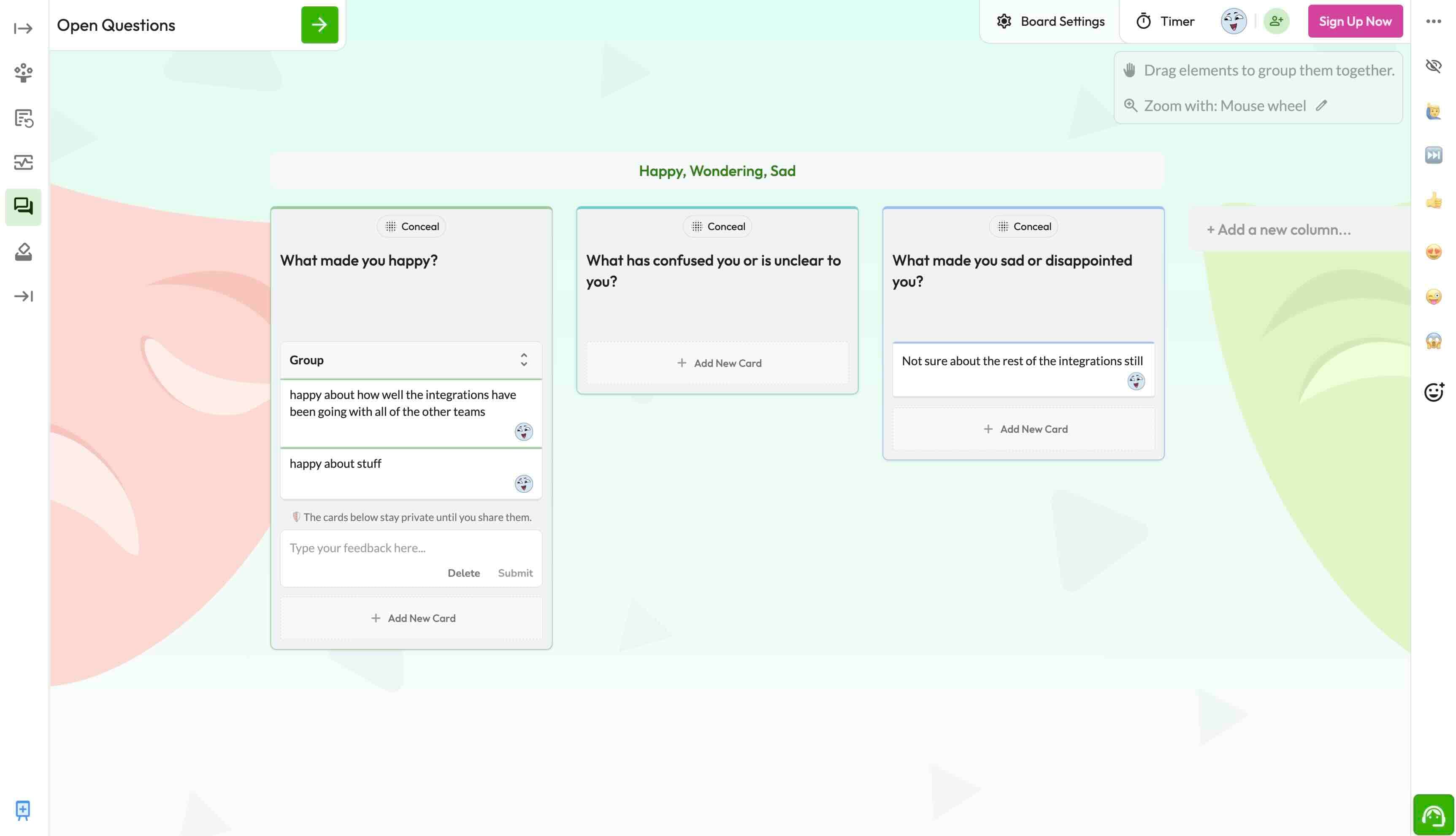
Psychology-Based Team Development Echometer retrospective tool Echometer brings a unique psychological approach to retrospectives, combining team health checks with traditional retro formats. It's designed for teams that want to go deeper into team dynamics and continuous improvement.

Feature Analysis

CategoryTool Offerings
Health Checks- Psychology-based surveys
- Team sentiment tracking
- Long-term trend analysis
Meeting Management- Guided facilitation
- Smart recommendations
- Action tracking
Analytics- Team development metrics
- Cross-team dashboards
- eNPS measurement

Unique Approach

  • Psychology-backed templates designed to stimulate deeper team reflection
  • Integrated 1:1 meeting tool for comprehensive team development
  • Automated pulse checks for continuous team monitoring

Pros & Cons

✅ Pros⚠️ Cons
Strong focus on team psychology & healthFree plan limited to 1 retro per month
Comprehensive team development analyticsLearning curve for psychology-based features
Good for teams interested in deeper insightsMore expensive paid plans (€29/team/month)

Free Plan Limitations

  • Teams: 1 team only
  • Retrospectives: 1 per month
  • Team Members: Unlimited
  • Data History: 6 months
  • Features: Full access but with usage limits
Echometer suits teams looking for a more scientific approach to retrospectives, though the free plan's severe limitations make it more of a trial than a usable free tier. See how Kollabe vs Echometer compares for teams wanting both psychological insights and practical AI features.

Making the Right Choice

When selecting a tool, consider:
  1. Growth Potential
  • Do you need a tool that scales with multiple teams?
  • Will you need advanced features down the line?
  1. Team Engagement
  • Does the interface excite your team?
  • Are there fun or interactive elements?
  1. Integration Requirements
  • Does it fit with your existing workflow or tools?
  • Can you easily export data or connect it to project management apps?
  1. Budget Considerations
  • How do the paid tiers compare if you need to upgrade?
  • Are there any hidden fees?

Best for Different Scenarios

Use CaseBest ToolMain Advantage
Full-Featured SolutionKollabeComprehensive free plan with AI-generated retros
Basic RetrospectivesEasyRetroSimple, straightforward, perfect for new or small teams
Multiple Team ManagementReetroFree multi-team support for up to 5 teams
Custom Workflows & AIKollabeAI-powered customization and flexible integrations
Psychology-FocusedEchometerDeep team health analytics and psychological insights

The Future of Retrospectives

Retrospectives continue to evolve in 2026, particularly with AI-enabled insights and interactive features. Here are a few key trends to watch:
  1. AI Integration
  • Automated facilitation, suggestions, and theme detection
  • Personalized retrospective templates
  1. Enhanced Engagement
  • Gamification and mini-activities
  • Real-time collaboration with multimedia elements
  1. Advanced Analytics
  • Deeper sentiment analysis
  • Team health and morale tracking
  • Predictive recommendations for action items

Frequently Asked Questions

It depends on which limit will bite first for your team. Kollabe's free retros have no monthly cap on the number of retros, ten participants per retro, and a seven-day retention window on each retro. Other tools in this list trade those dimensions off differently: some give a longer retention window but cap monthly retro count or team size. If you plan to live on the free plan for years, pick on the limit that will hit your team first (retention, participants, monthly count, AI access).

AI features in retro tools (template generation, smart summaries, sentiment analysis, action item suggestions) are usually gated to paid tiers. Kollabe puts its AI features on the Premium plan, and most competitors follow the same pattern. If you want to test what AI-assisted retros feel like, look for a free trial of a paid plan rather than expecting AI to land on a long-term free tier.

Varies a lot by tool. Kollabe's free plan keeps each retro accessible for seven days, after which it expires. Other free tools offer longer windows, sometimes thirty days or several months, but often pair the longer window with stricter limits elsewhere (one retro per month, fewer participants). If your team relies on looking back at past retros for trend analysis, retention is the dimension that pushes most teams toward a paid plan.

For real-time collaboration, yes. Every tool in this list supports remote participants joining the same retro board. The differences are about engagement, not whether remote works at all. Kollabe leans into GIFs, emojis, kudos, and AI-generated retro backgrounds so the board feels like the team's room rather than a corporate template. If your remote retros feel flat, the visual side of the tool matters more than the feature checklist.

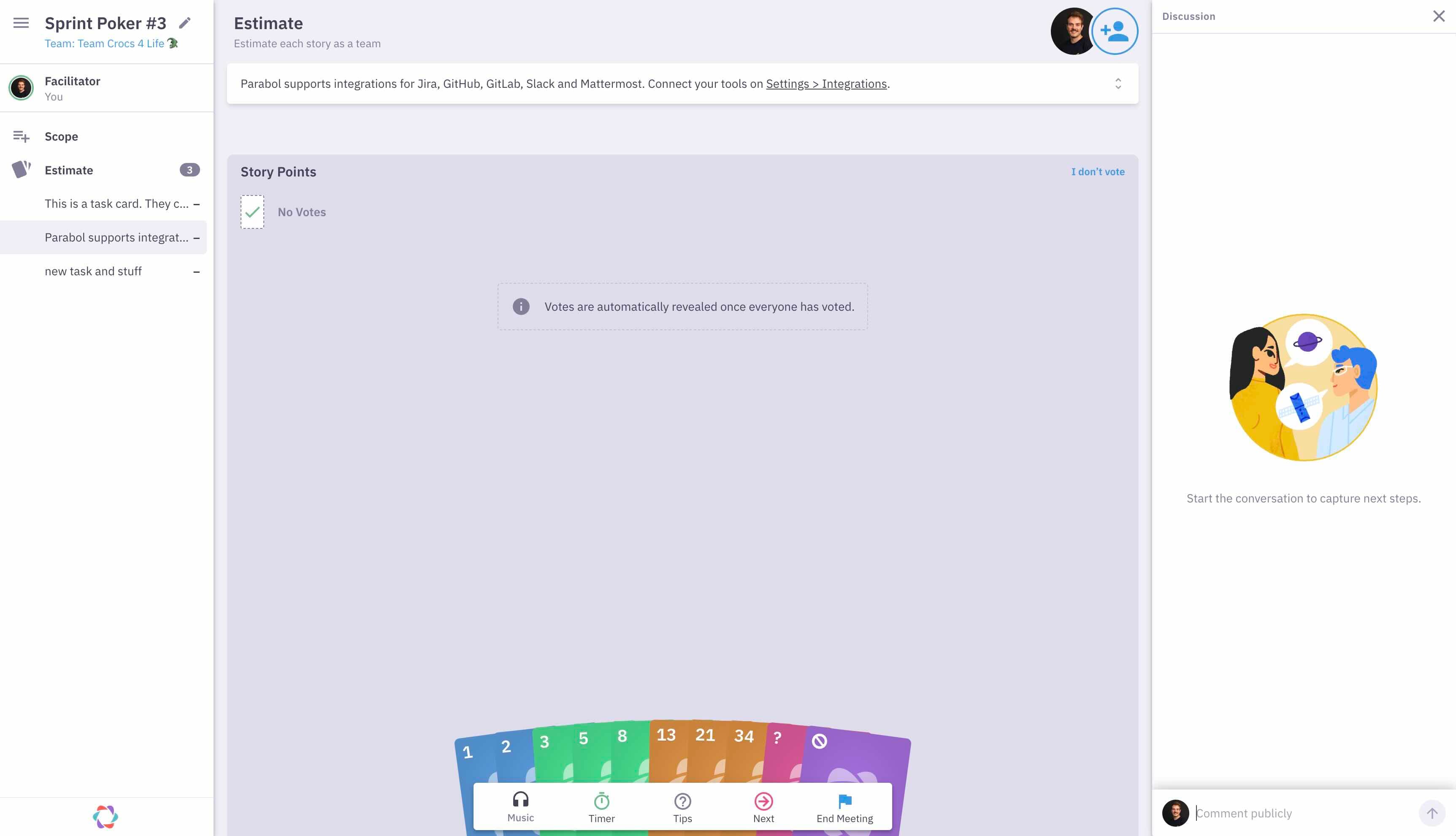
They serve different agile ceremonies. Retros happen at the end of a sprint to reflect on what went well and what needs to improve. Planning poker happens during sprint planning to estimate effort on user stories before the team commits to the work. Some tools (Kollabe, Parabol) cover both ceremonies; most cover only one.

With Kollabe, yes. The facilitator can create a retro and share the link without signing up, and participants join the same way. Some other tools require the facilitator to register even if participants do not. If your team wants to try a retrospective without committing to a tool, the no-signup options let you do that in under a minute.

Conclusion

All five tools—Kollabe, Neatro, Reetro, EasyRetro, and Echometer—bring unique strengths to the table. Whether you need robust AI features, simple boards, or multi-team support, there's an option to match your team's size, budget, and workflow. That said, Kollabe emerges as the standout for its AI-driven features, engaging interface, and comprehensive analytics. If you're looking to elevate your retros in 2026, try Kollabe today and see how seamless, data-informed retrospectives can transform your agile process.
Note: Features and pricing are accurate as of January 2026. Check official websites for the most up-to-date information.