AI in agile project management: what's actually working in 2026
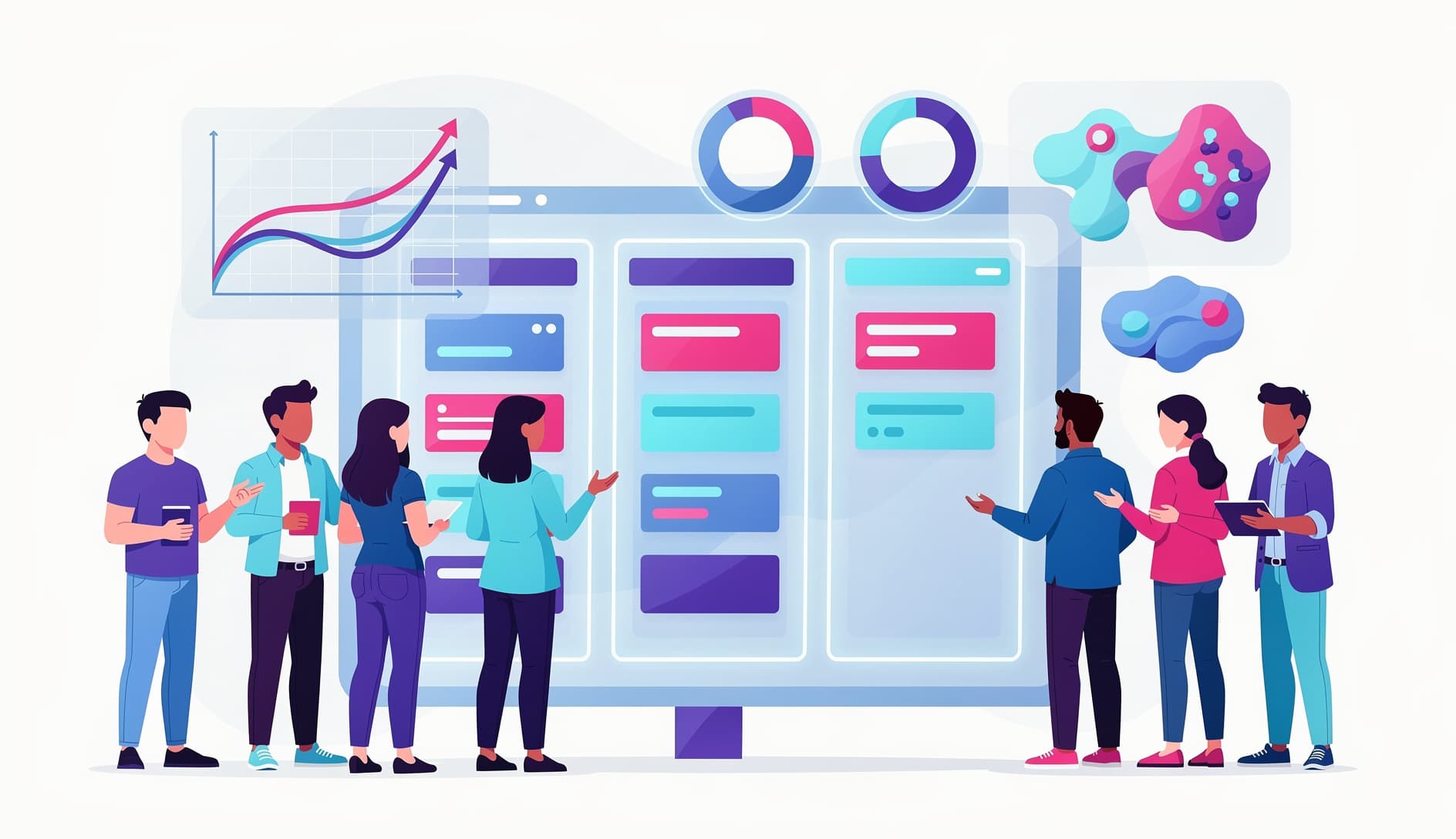
Agile team collaborating around a digital board with AI-generated insights floating above, showing sprint data, sentiment indicators, and task suggestions in a modern office settingAgile team collaborating around a digital board with AI-generated insights floating above, showing sprint data, sentiment indicators, and task suggestions in a modern office setting AI adoption in software teams jumped from 68% to 84% in the past year, according to Digital.ai's 18th State of Agile Report. But "adoption" covers everything from a developer using Copilot to autocomplete code to an entire team running AI-powered sprint planning. The gap between those two realities is wide. This post covers what's working across agile practices right now, what's overhyped, and what to expect if you're thinking about adding AI to your workflow.

Sprint planning and estimation

This is where AI has made the most progress beyond code generation. Traditional estimation relies on team consensus through methods like planning poker. That process works, but it's slow and subject to anchoring bias, where the first number someone mentions pulls everyone else toward it. AI-assisted estimation tools now analyze historical sprint data (how long similar stories took, which types of tasks your team consistently underestimates) and present that context before the team votes. The AI doesn't replace the conversation. It gives the team better data to work with. Jira's Atlassian Intelligence can break down epics into smaller stories automatically. Zenhub's GPT-powered Pulse feature flags estimation inconsistencies by comparing current estimates against historical patterns. And tools like Kollabe track voting patterns across sessions to identify when specific team members are consistently optimistic or pessimistic relative to actual outcomes.

What doesn't work yet

Fully automated estimation, where AI assigns story points without team input, still produces unreliable results. Software estimation depends on context that's hard to capture in ticket descriptions: team familiarity with the codebase, upcoming holidays, technical debt in specific areas. AI can't account for all of that.

Retrospectives

AI is showing up in retrospectives in two ways: sentiment analysis and pattern detection. Illustrated dashboard showing retrospective feedback cards being analyzed by AI, with sentiment scores and recurring theme clusters highlighted across multiple sprintsIllustrated dashboard showing retrospective feedback cards being analyzed by AI, with sentiment scores and recurring theme clusters highlighted across multiple sprints Sentiment analysis scans retro board comments and categorizes them by tone. Tools like TeamRetro and Miro can cluster feedback by keyword or sentiment automatically, pulling out themes the team might miss when reading cards one by one. Cross-sprint pattern detection is the more useful application. Instead of treating each retro in isolation, AI can compare feedback across multiple sprints. If "deployment process" keeps appearing as a pain point over three consecutive retros, the AI flags it as a persistent issue, even if the team discussed it briefly each time and moved on. This matters because of accountability. Teams run retros, identify action items, then forget about them by mid-sprint. AI that tracks recurring themes creates a paper trail that's harder to ignore.

Standups and daily check-ins

Async standups generate a lot of text that nobody wants to read in full. AI summarization is the obvious use case, and it works well. Kollabe's standup tool generates daily and weekly AI summaries that pull out blockers, track participation trends, and group related work by theme. Instead of reading 50 individual updates, a manager reads a one-paragraph summary with the three things that actually need attention. For a deeper look at how this works, see our post on how AI spots patterns in your standups. The multi-day analysis is where it gets more valuable than simple summarization. When AI looks at standup data across a full sprint, it catches patterns humans miss: a blocker that keeps reappearing, a team member whose participation dropped, or work that's been "in progress" for two weeks.

Backlog management

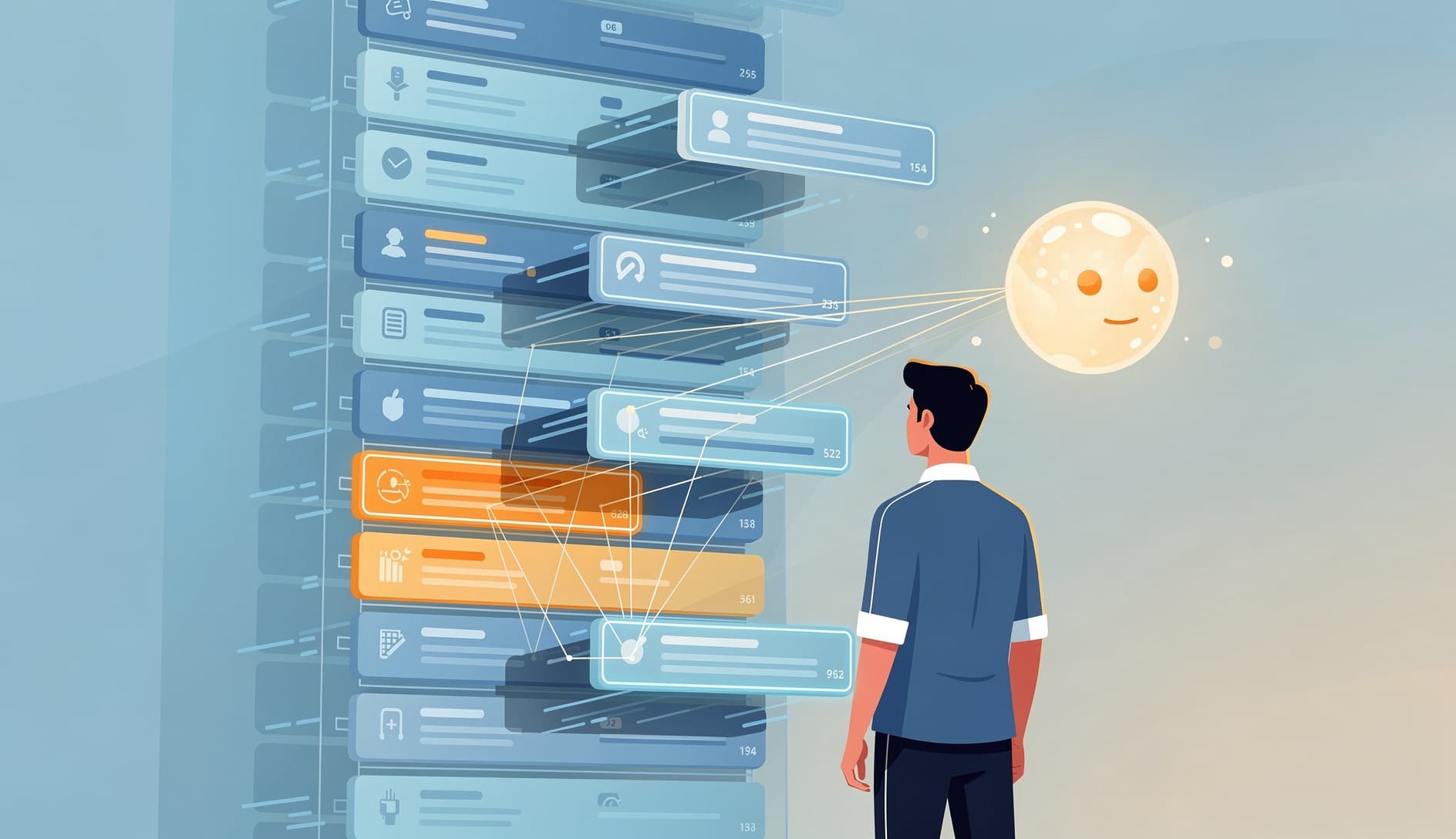
AI-powered backlog grooming is still early but showing promise. The pitch: AI reads through your backlog, finds duplicate or overlapping tickets, suggests priority ordering based on dependencies, and flags stale items that haven't moved in months. Jira's natural language search lets you write queries in plain English ("show me all high-priority bugs my team updated this week") instead of learning JQL syntax. It can also generate child issues from an epic description, which speeds up the initial breakdown phase. The limitation is that backlog prioritization requires business context that lives in people's heads, not in ticket descriptions. AI can suggest, but a product owner still needs to make the calls. Product owner reviewing a backlog with AI-suggested priority rankings and dependency lines connecting related items, showing both the AI recommendations and manual overridesProduct owner reviewing a backlog with AI-suggested priority rankings and dependency lines connecting related items, showing both the AI recommendations and manual overrides

Where AI falls short in agile

Not everything benefits from AI. A few areas where the technology is more marketing than substance: AI Scrum Masters. Several tools now claim to offer an "AI Scrum Master" that facilitates ceremonies, tracks team health, and coaches team members. In practice, these are fancy dashboards with chatbot interfaces. The human parts of being a Scrum Master (reading a room, knowing when to push and when to back off) aren't things a language model can do. Automated sprint scope adjustment. Some tools promise to automatically adjust sprint scope based on velocity data and resource availability. This sounds great until the AI removes a ticket that the CEO specifically asked about in last week's all-hands. Scope decisions need human judgment. Predicting team burnout from data. Participation metrics and sentiment scores can hint at problems, but burnout prediction from standup text is unreliable. A quiet week might mean burnout, vacation, heads-down focus work, or just nothing interesting to report. Use these signals as conversation starters, not diagnoses.

A practical approach to adding AI to your agile workflow

If you want to adopt AI without chasing hype, here's what actually makes a difference:
Agile practiceHigh-value AI useLow-value AI use
Sprint planningHistorical estimation data, pattern analysisFully automated story point assignment
RetrospectivesCross-sprint theme tracking, sentiment clusteringAutomated action item generation
StandupsMulti-day summarization, blocker detectionReplacing human check-ins entirely
Backlog groomingDuplicate detection, stale item flaggingAutomated priority ordering
Sprint reviewProgress summarization, metric visualizationAutomated stakeholder communication

The adoption gap

The 18th State of Agile Report found that while 84% of teams use AI somewhere, only 41% have implemented it in a coordinated way across their workflow. Most teams are still in the "individual developers using Copilot" phase, not the "AI integrated into our agile ceremonies" phase. That gap will close. But the teams closing it fastest are the ones being selective, picking one or two applications that save real time rather than trying to AI-enable everything at once. The fundamentals still matter. AI doesn't fix bad sprint planning habits, dysfunctional retros, or standups that nobody reads. It amplifies what's already working and makes good practices easier to sustain.

No. The best AI tools layer on top of existing workflows. If you already run planning poker, AI adds historical context to inform your estimates. If you already do async standups, AI summarizes the updates. You don't need to overhaul anything.

For standup summarization and estimation analytics, yes. These features save measurable time. For "AI Scrum Master" features and automated sprint planning, the value is less clear and varies heavily by team size and workflow.

No. AI handles data processing: summarizing, pattern matching, flagging anomalies. Scrum Masters handle people: coaching, facilitating, removing organizational blockers. These are different skill sets. Gartner predicts 40% of today's project management tasks will be automated, but the role itself evolves rather than disappears.

Track time spent on status collection and reporting before and after adoption. Jellyfish's 2025 data shows teams with full AI adoption merge 113% more PRs per engineer and reduce cycle time by 24%. Standup summarization alone typically saves managers 1-2 hours per week.
Last Updated on 09/02/2026